
Preservation of Modern Architecture
Wido Quist
16 Aprile 2026
14:30-15:30 Open Lecture
15:30-18:30 Co-creation Activity (solo per gli studenti PoC)
Aula 1B DAD | UniGe
ID riunione Teams: 348 264 398 899 83
Passcode: vu9bH97U
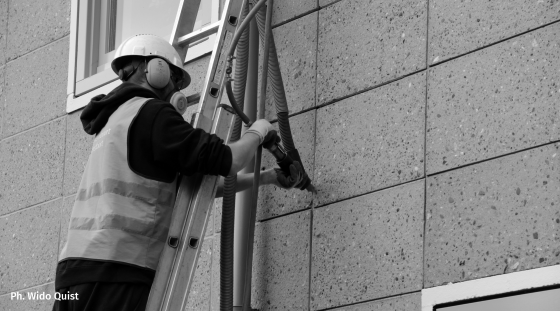
Questa lezione intende riflettere sulla durabilità intrinseca e sulla sostenibilità degli edifici del Movimento Moderno, nonché sulle possibilità di accrescerle attraverso interventi mirati.
Verrà approfondito il rapporto tra valori, progetto e tecnologia, mettendo in evidenza differenze e affinità tra il patrimonio costruito del Movimento Moderno, spesso segnato da una maggiore fragilità, e quello di tradizione costruttiva più consolidata.
Il patrimonio sarà inoltre considerato come risorsa per lo sviluppo dello spazio costruito, nella prospettiva di una conservazione capace di accompagnarne la trasformazione, con particolare attenzione agli interventi sull’involucro edilizio. La lezione si concentrerà soprattutto su casi olandesi, affiancati da alcuni esempi internazionali.
Wido Quist
Professore Associato in Heritage & Technology, TU Delft
Segretario Generale di DOCOMOMO International
Wido Quist è Professore Associato e si occupa dei materiali dell’architettura del Novecento e del riuso adattivo del patrimonio moderno. Dirige la sezione Heritage & Architecture presso la Faculty of Architecture and the Built Environment della TU Delft, nei Paesi Bassi. È segretario generale di Docomomo International e presidente di Docomomo Netherlands. Dal 2022 è, insieme a Uta Pottgiesser, direttore del Docomomo Journal, rivista indicizzata in SCOPUS. Fa parte del Faculty Career Development Committee e coordina, insieme ad altri colleghi, il percorso formativo dedicato al progetto all’interno del curriculum triennale.
È una figura attivamente impegnata nella ricerca e nella didattica, coinvolta in numerosi progetti nazionali e internazionali, e autore di un’ampia produzione scientifica sui temi della storia delle costruzioni, del riuso adattivo e del patrimonio moderno. La sua ricerca e il suo insegnamento si concentrano sulla conservazione e sul riuso del patrimonio costruito del XX secolo, in una prospettiva capace di mettere in dialogo competenze disciplinari diverse. Il suo lavoro approfondisce in particolare il rapporto tra conoscenza storica dei materiali dell’architettura moderna e strategie di conservazione e riuso.
Co-creation Activity
GROUP 01
Studenti: Krisa Çela, Anastasiia Druzhinina, Antonela Frroku, Amina Gjineci, Virginia Golin, Ximena Rodriguez, Ana Maria Sanchez, Valeria Sitzia
Balancing Heritage and Performance
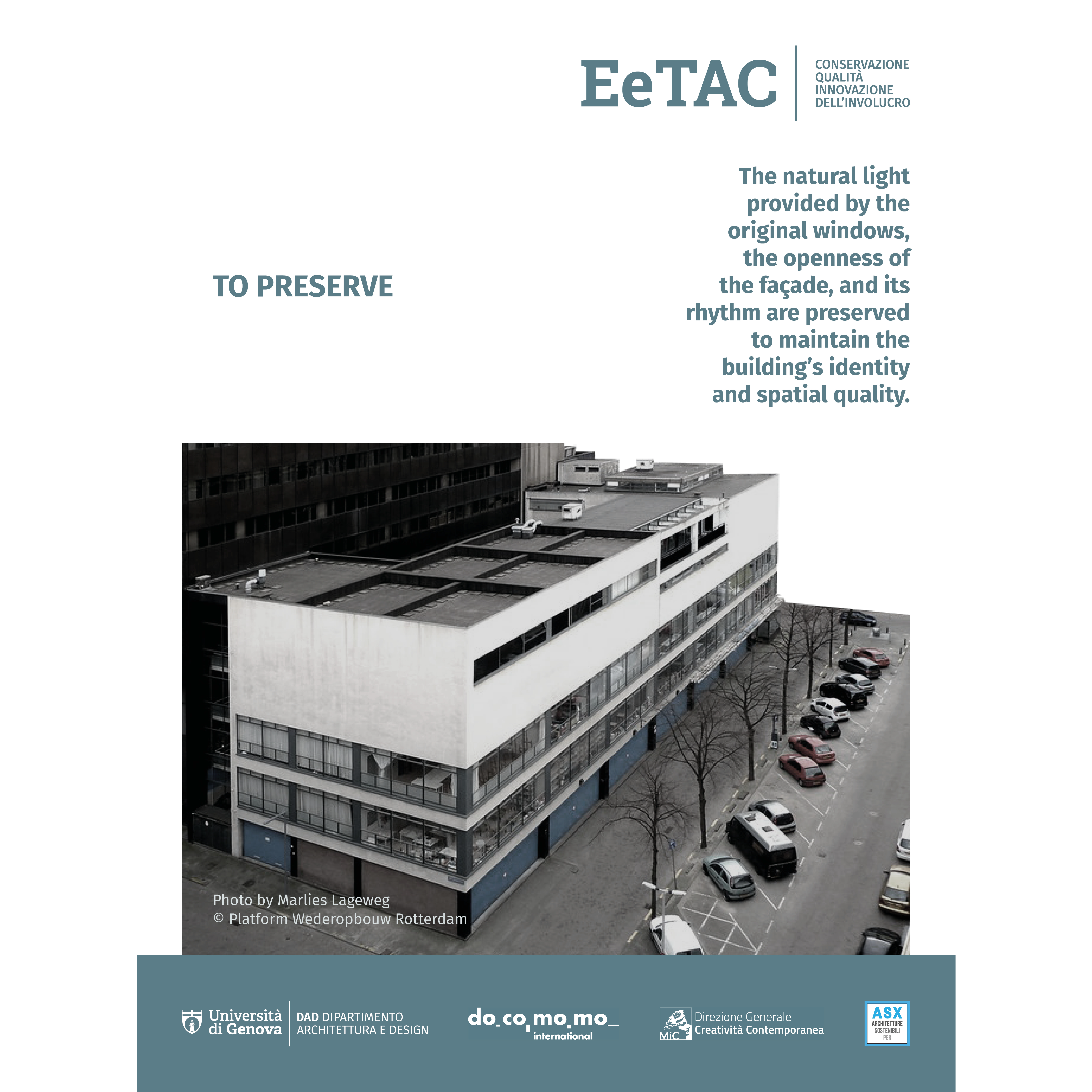
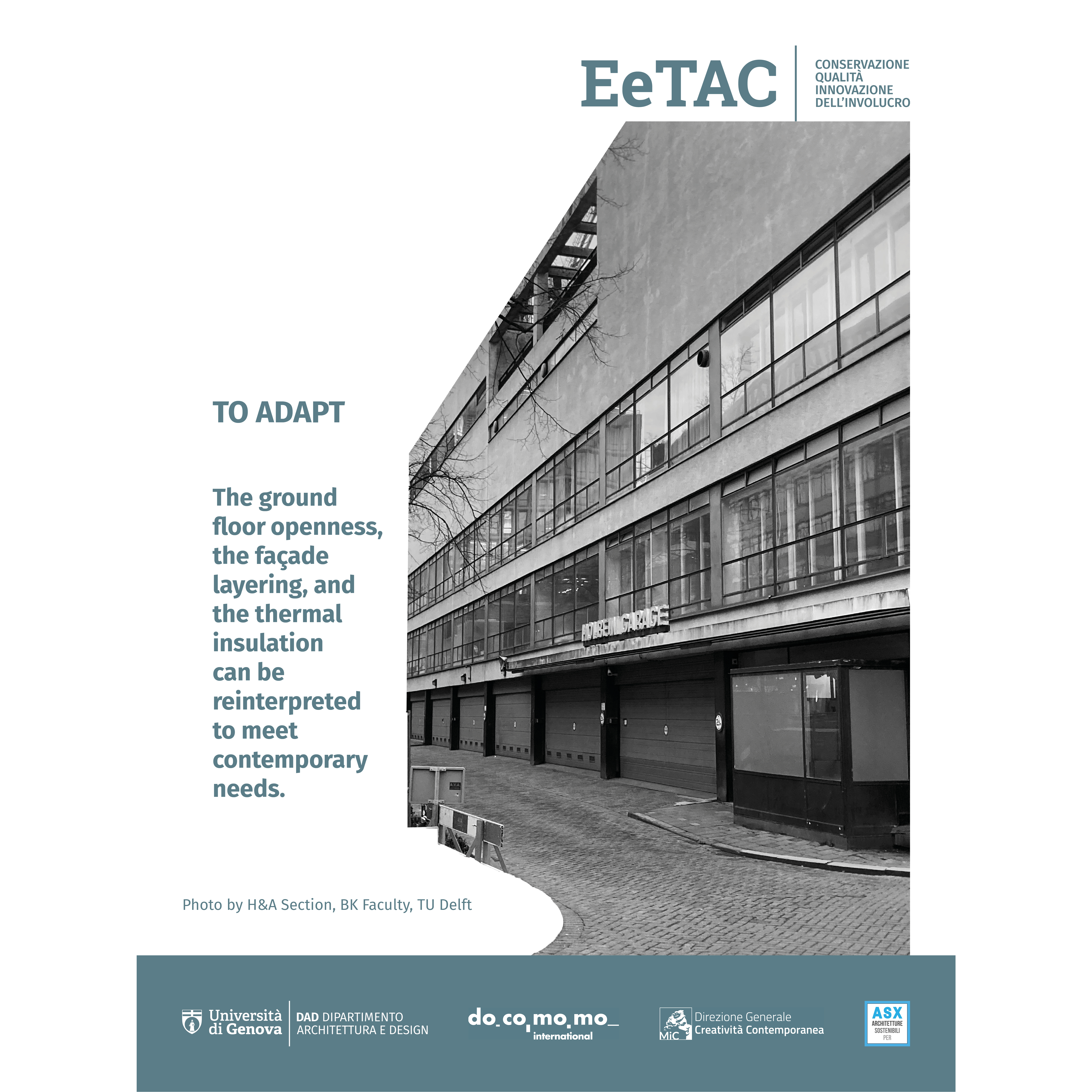
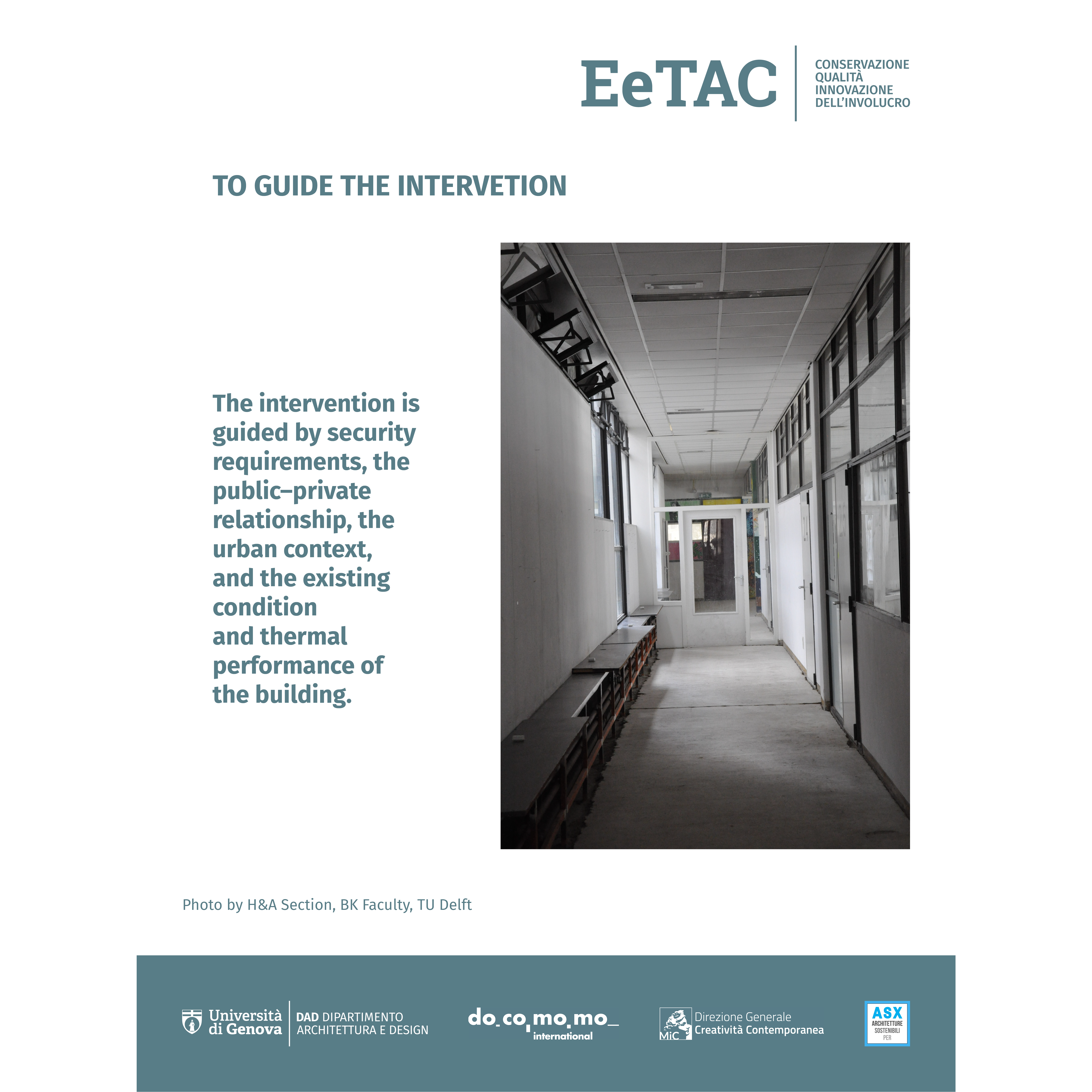
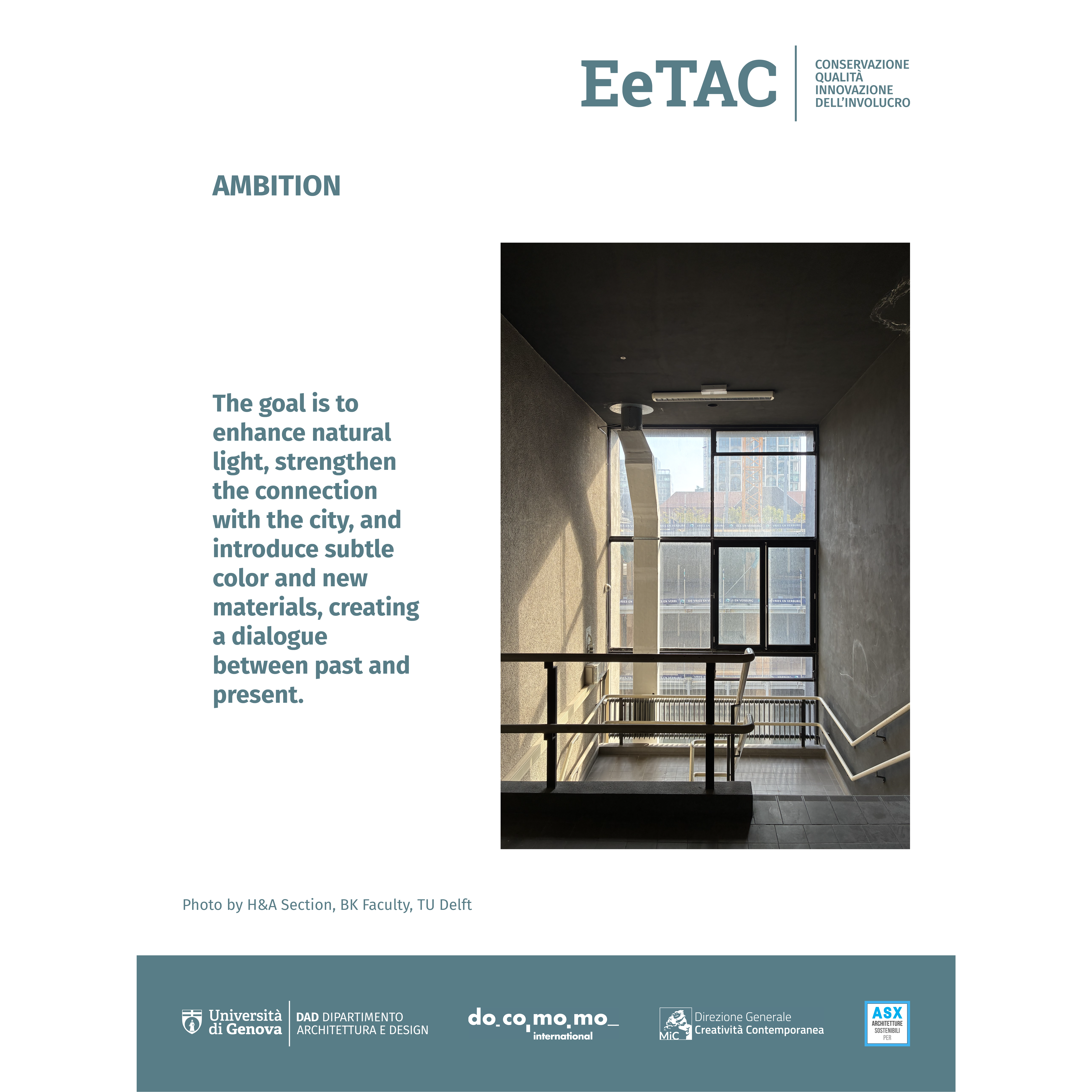
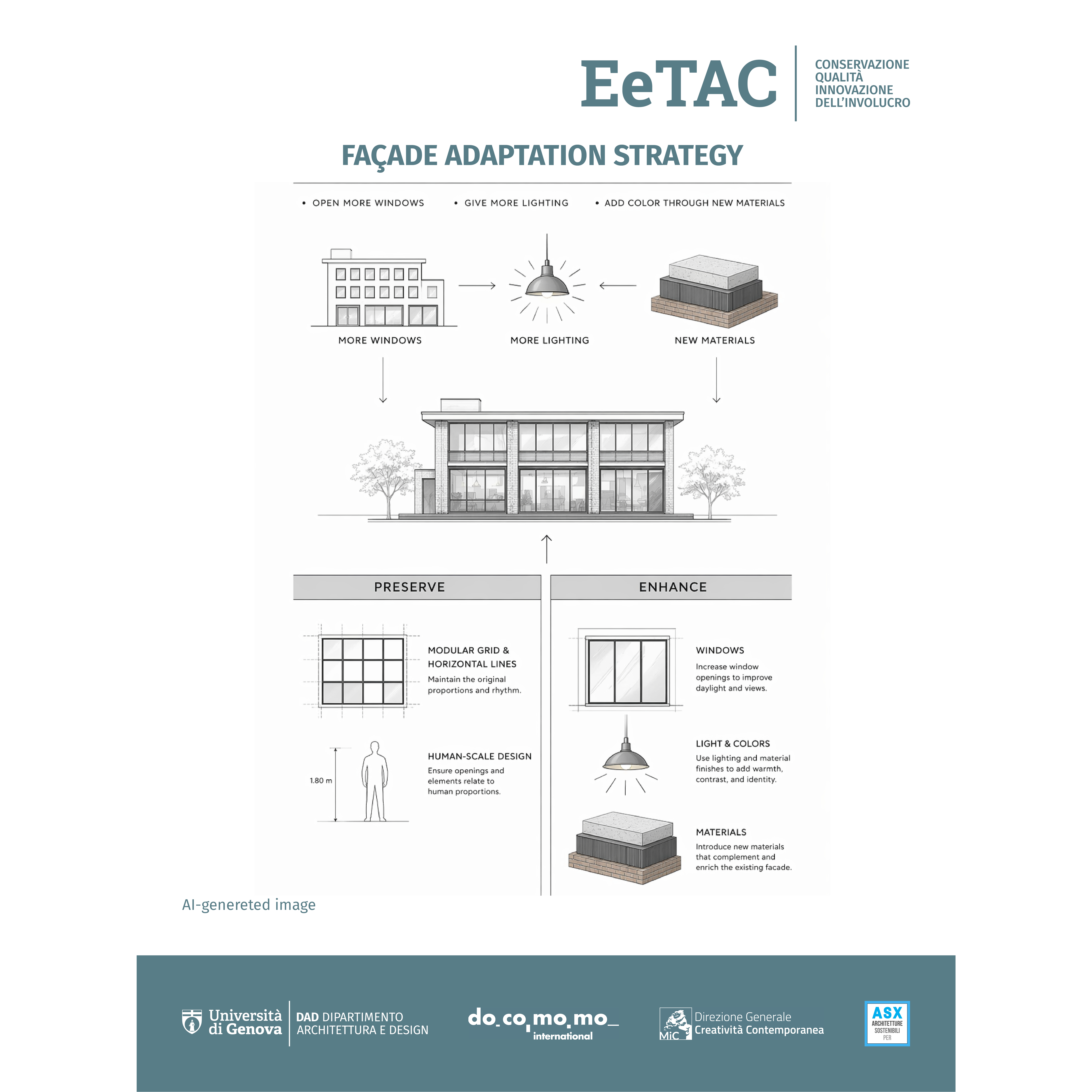
Exploring how heritage architecture can evolve without losing its identity. The façade becomes a medium for dialogue, preserving natural light, rhythm, and openness while introducing new layers, materials, and improved thermal performance. Through careful intervention, the project balances continuity and change, responding to the urban context and redefining the relationship between public and private space. The aim is to strengthen the connection with the city while enhancing spatial quality, allowing past and present to coexist through subtle yet intentional design strategies.
Keywords: façade design, architectural intervention, public-private interface

GROUP 02
Studenti: Lorenzo Berutti Bergotto, Simone Carnesecca, Nour El Moussaoui, Moddar Khatib, Assam Lamia, Giacomo Persico, Saba Samadi, Francesco Scapuzzi
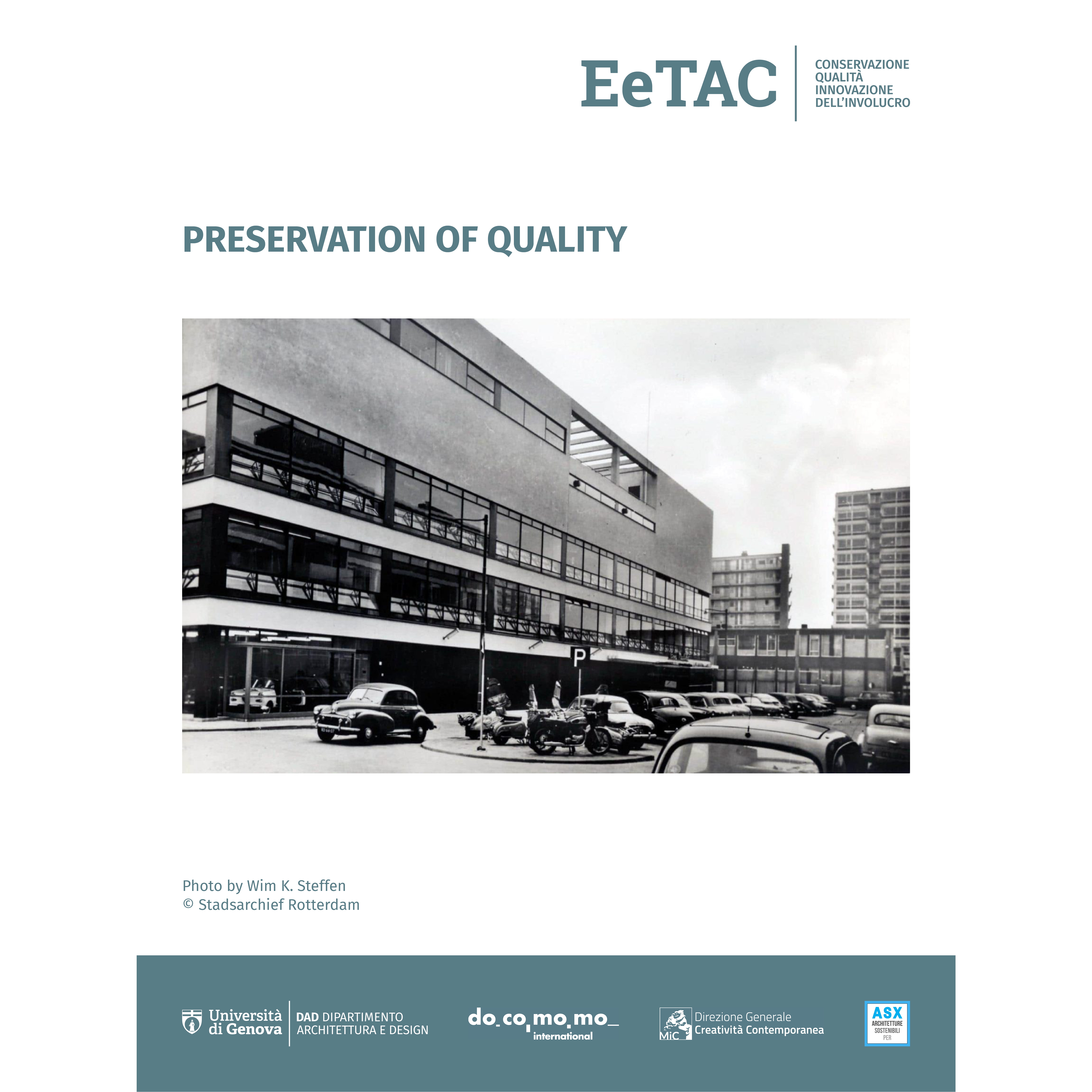
Preservation of Quality
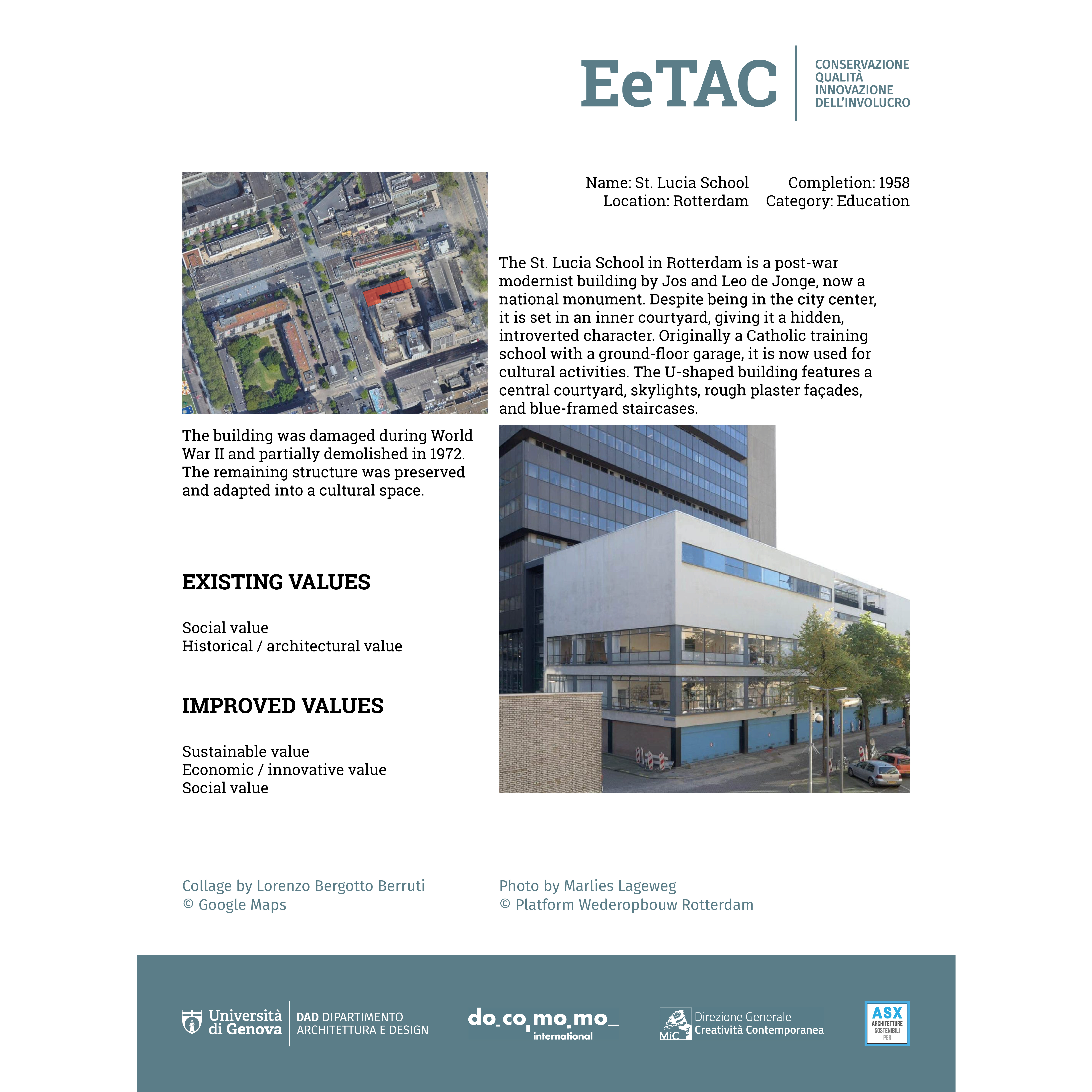
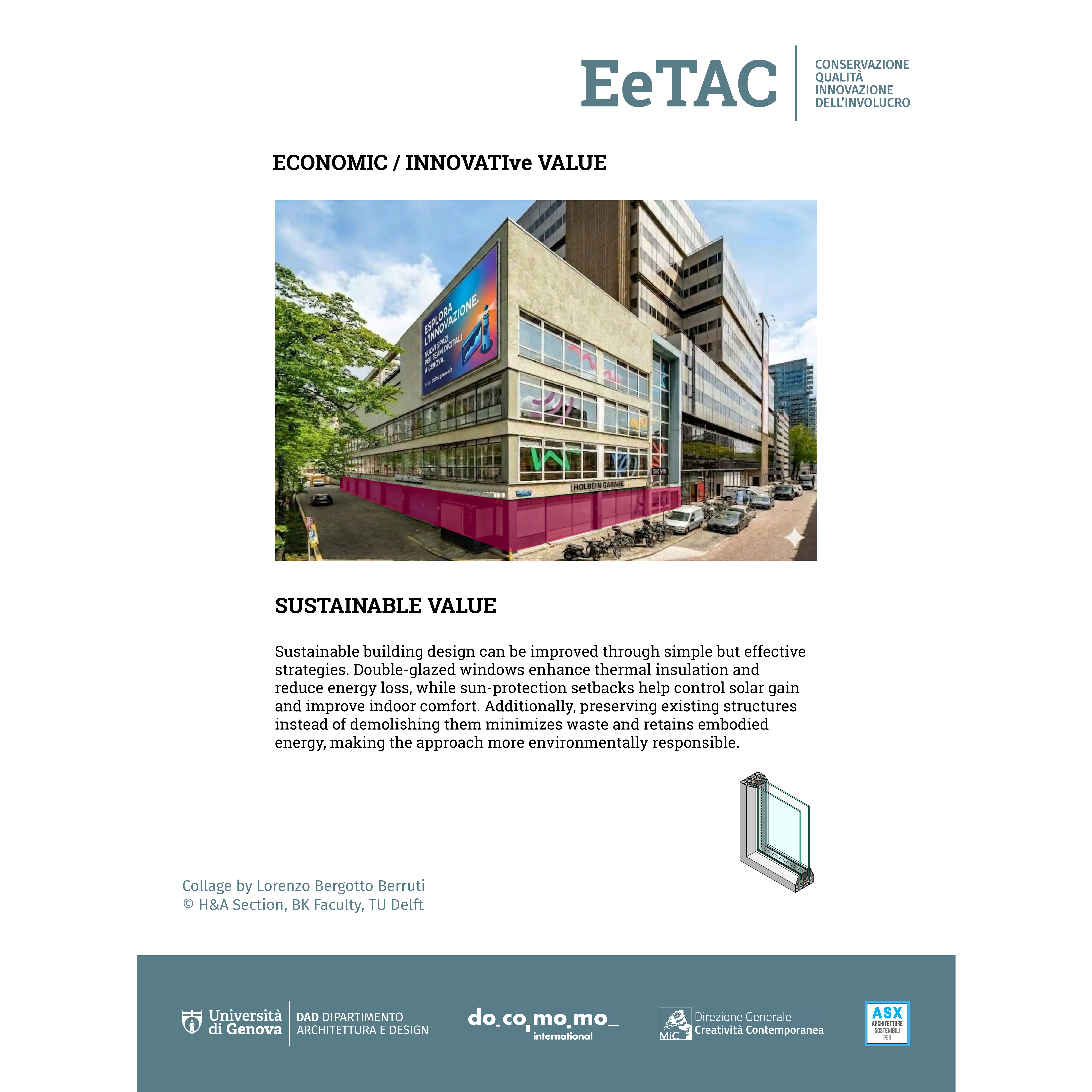
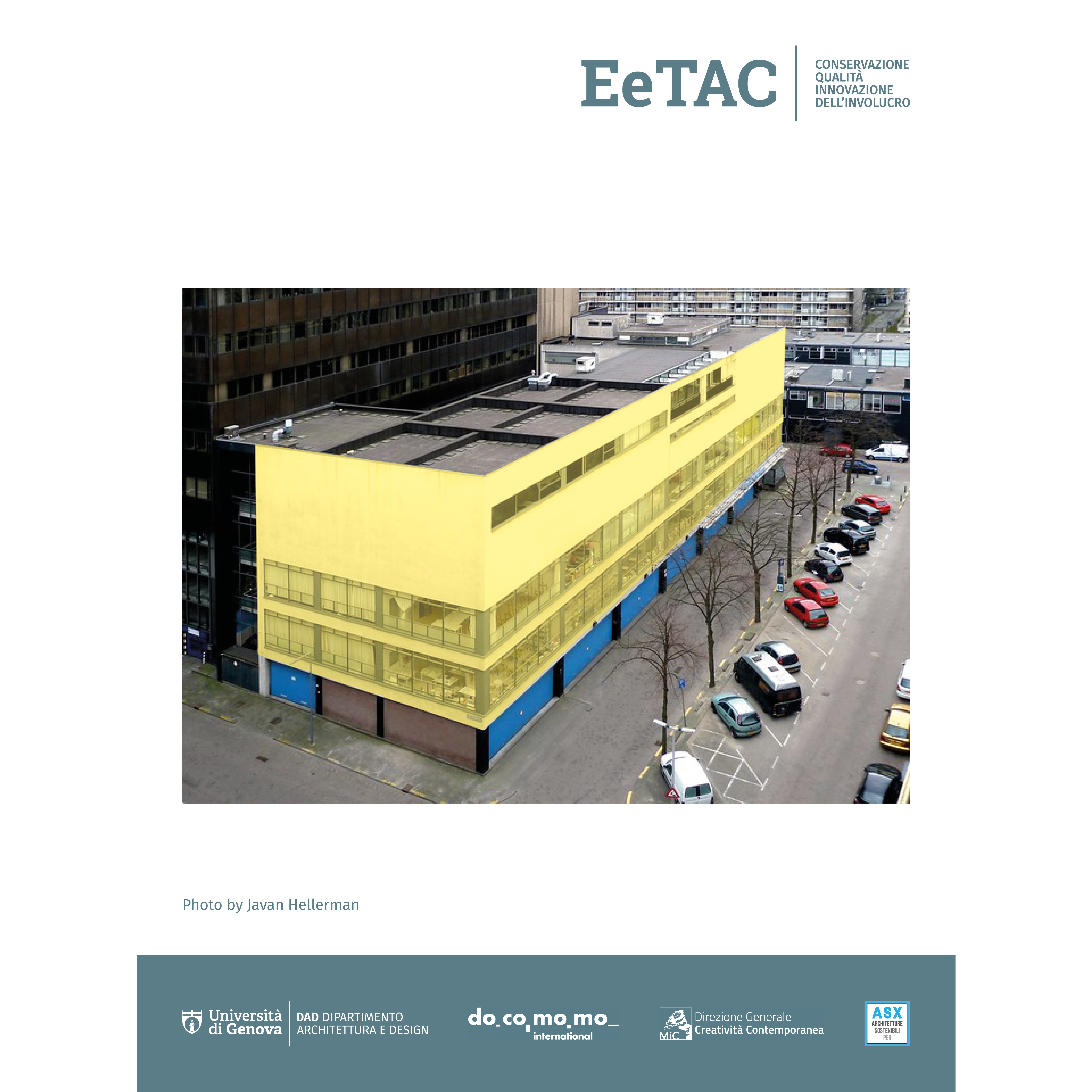
The adaptive reuse plan for Lucia School in Rotterdam (1958) aims to improve future performance while building on its solid existing qualities. In social terms, the building already acts as a well-known community anchor, encouraging daily engagement and collective memory. In historical and architectural terms, it reflects mid-20th-century educational design through its honest materiality, solid-void relationships, and straightforward spatial organization. These characteristics define its identity and are carefully preserved. Our strategy aims to enhance these values without sacrificing this character. Simple, practical solutions such as adding sun-protection setbacks to control solar gain and indoor comfort and installing double-glazed windows to improve thermal insulation can increase sustainable value. By preserving the existing structure, embodied energy is retained and demolition waste is avoided. Social value is further enhanced by preserving the building’s recognizable form and ensuring continuity between past use and future adaptation.
Keywords: community identity, collective memory, historical value


GROUP 03
Studenti: Mary Abou Sekka, Nita Baholli, Niki Eftekharnia, Sofia Kalenichenko, Faeze Kamali, Donghyuk Kang, Katherine Pazmino, Vladislav Prudiakov
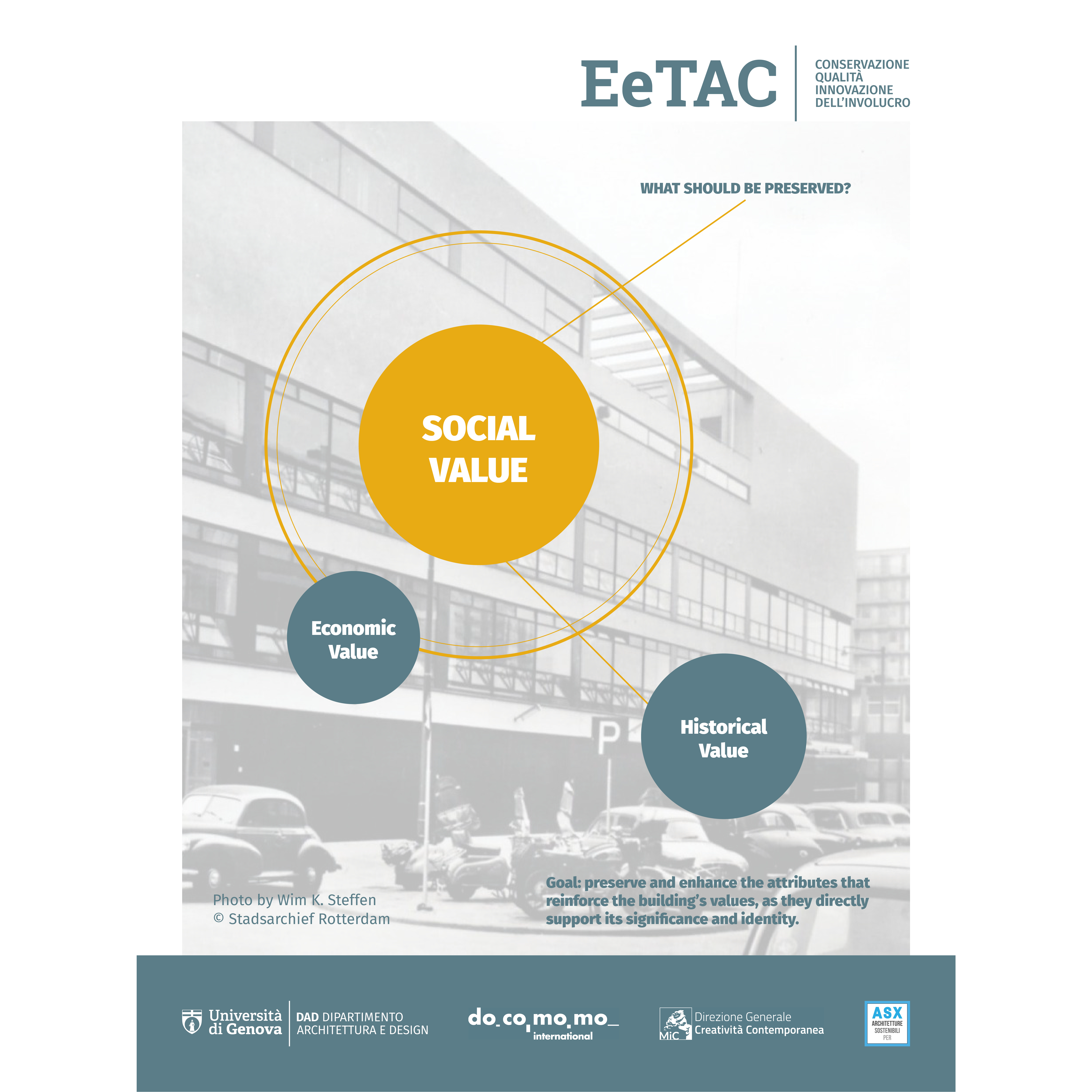
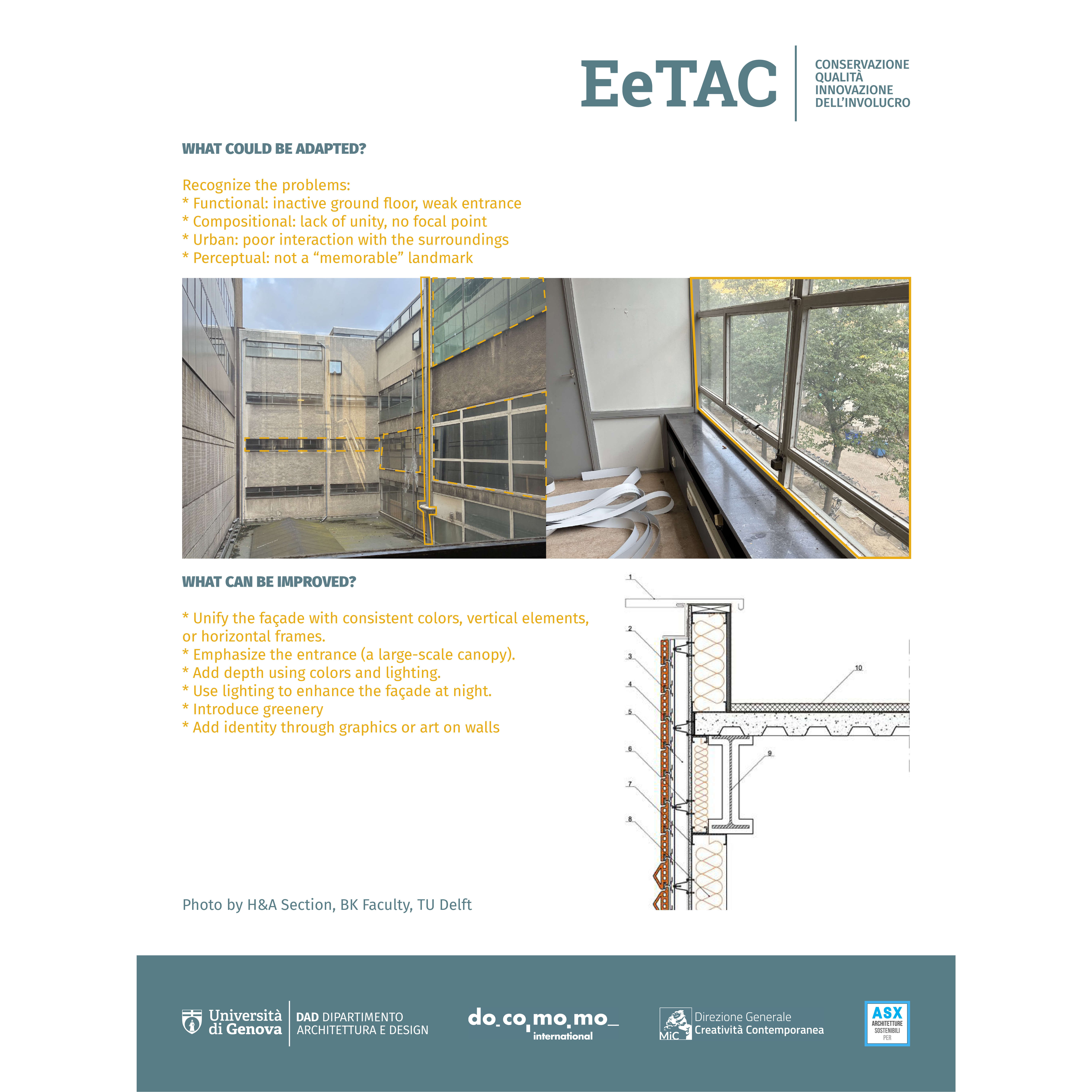
Reactivation of Values
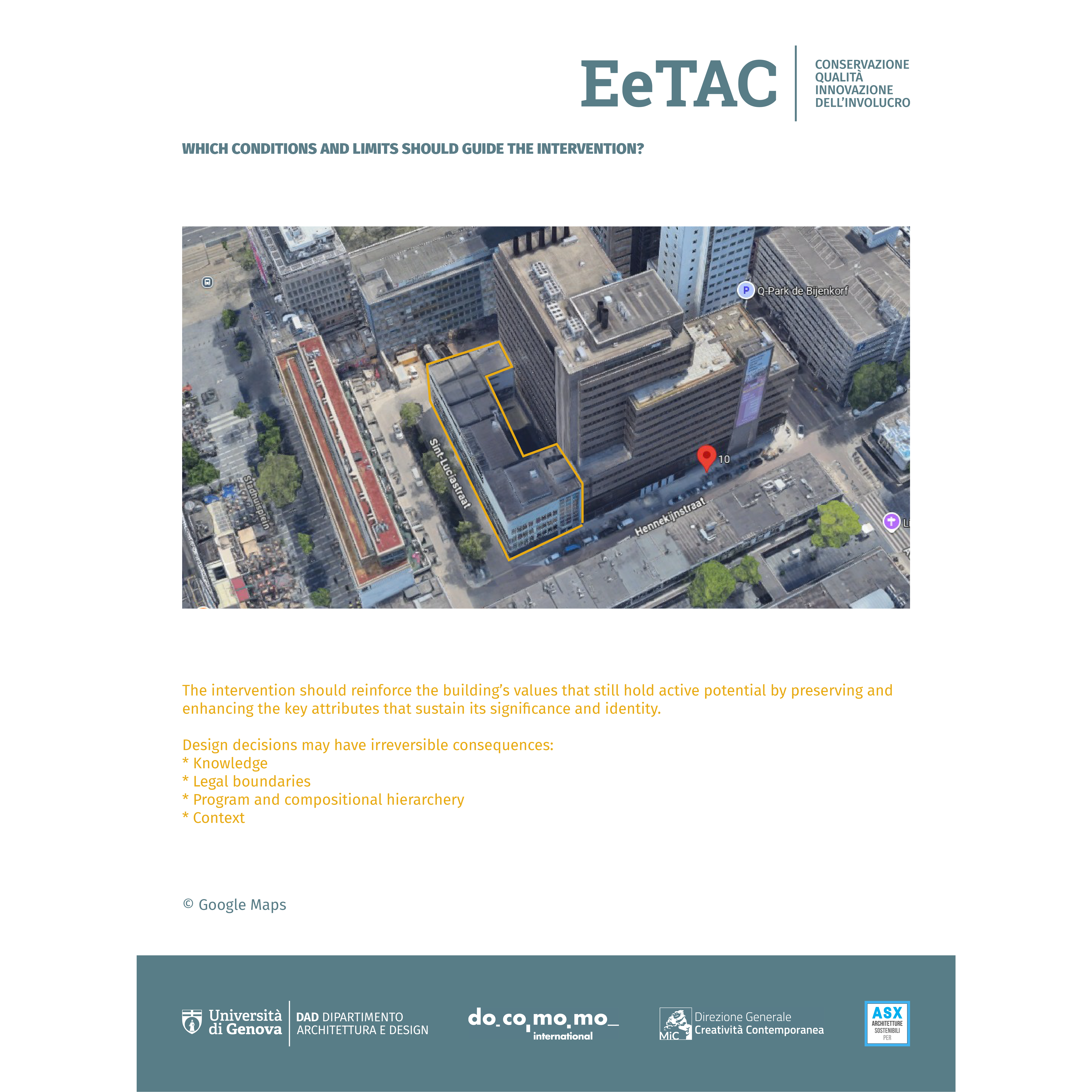
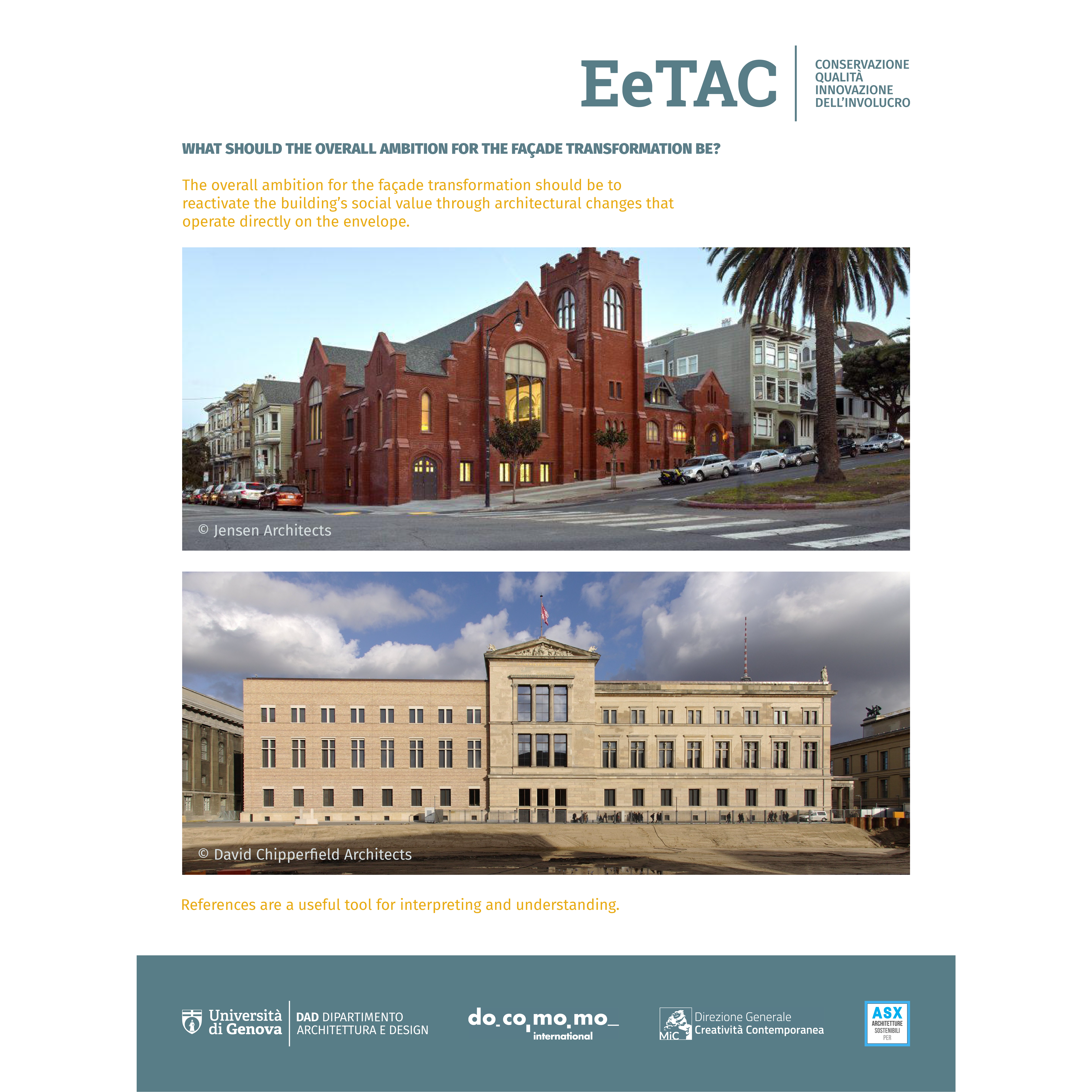
Investigating how architectural intervention on the façade can reactivate the social, historical, and economic values of an existing building. Starting from the identification of what should be preserved and what can be improved, the proposal focuses on transforming an inactive and visually weak envelope into a more engaging and recognizable element within the urban context. By enhancing the entrance, introducing depth, and improving the relationship with the surroundings, the design aims to turn the building into an active interface that strengthens its identity and reconnects it with public life.
Keywords: value reactivation, urban interface, public engagement
GROUP 04
Studenti: Victoria Akhundov, Andrei Eliseev, Zahra Gholamzadeh, Alon Gilinski, Andrea Giuseppe Spinelli, Negin Tamjid, Eteri Velijanashvili
Preserving Identity Through Transformation
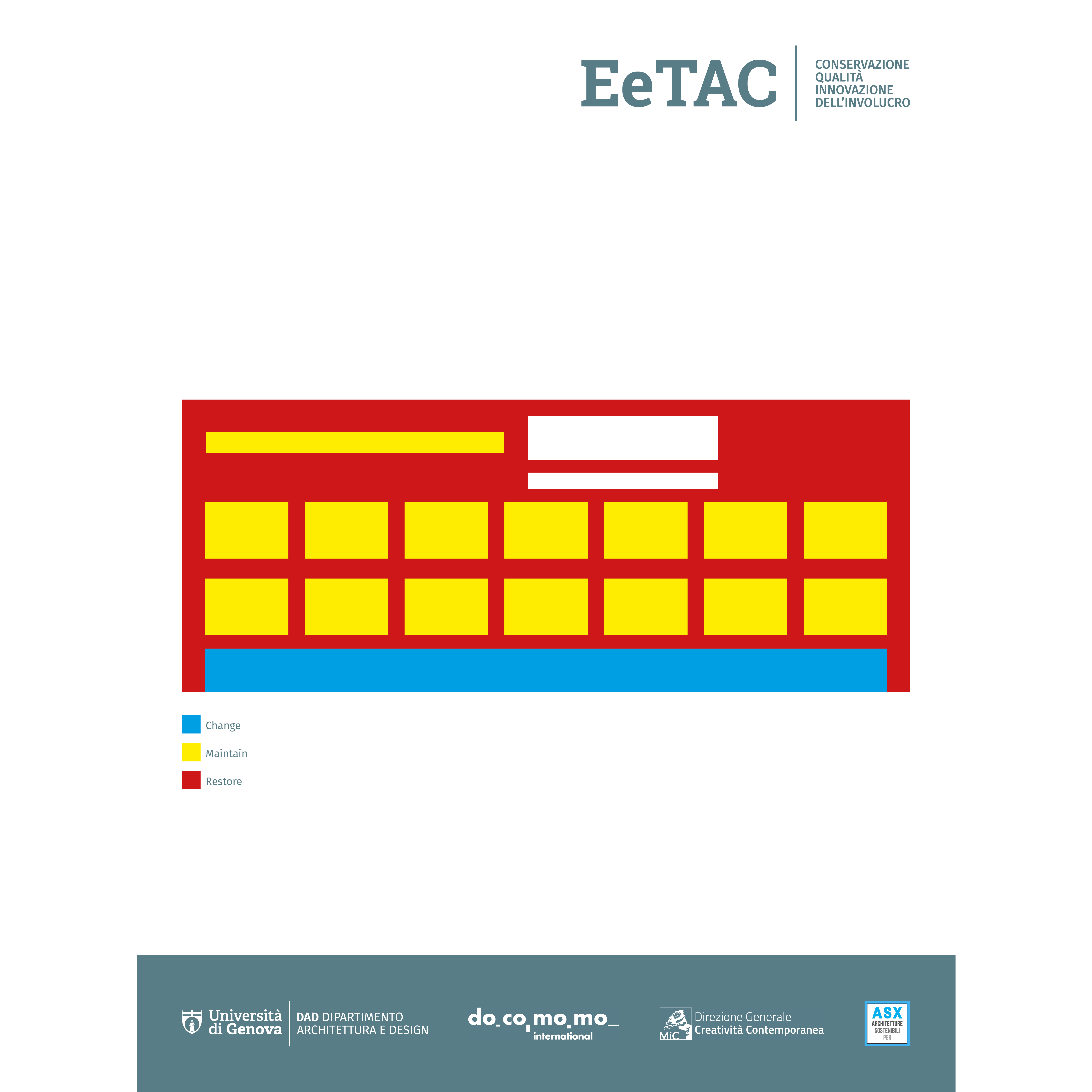
The project is grounded in a careful balance between preservation and transformation, where the existing façade is seen not as an obstacle but as a fundamental asset. The original façade is maintained as the primary expression of the building’s identity. Its rhythm, proportions, and material character are preserved to retain the architectural and historical continuity of the structure. Rather than replacing, the project focuses on maintenance and upgrading. The intervention improves environmental performance and usability while respecting the integrity of the original structure through minimal and reversible actions. The façade is not redesigned, but reinterpreted, preserved in its essence and enhanced through a measured contemporary layer that allows the building to remain relevant over time.
Keywords: continuity, identity, maintenance

GROUP 05
Studenti: Kristina Bujnakova, Elizabete Dreimane, Setareh Momen Zadeh, Lea Neufeldova, Kimia Piri, Torkan Rostamlou, Toms Martins Šaķis, Neda Saljoughi
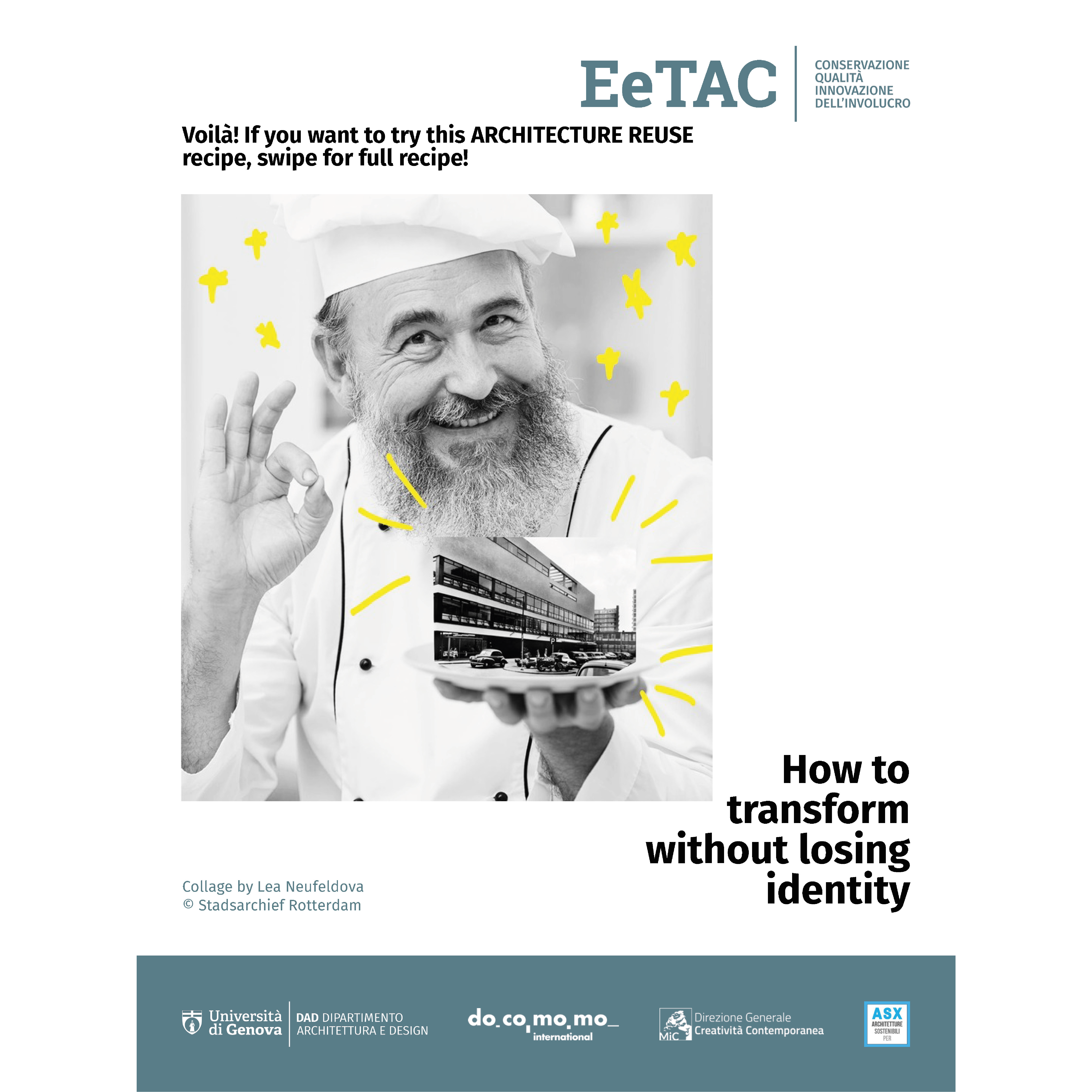
How to Transform Without Losing Identity
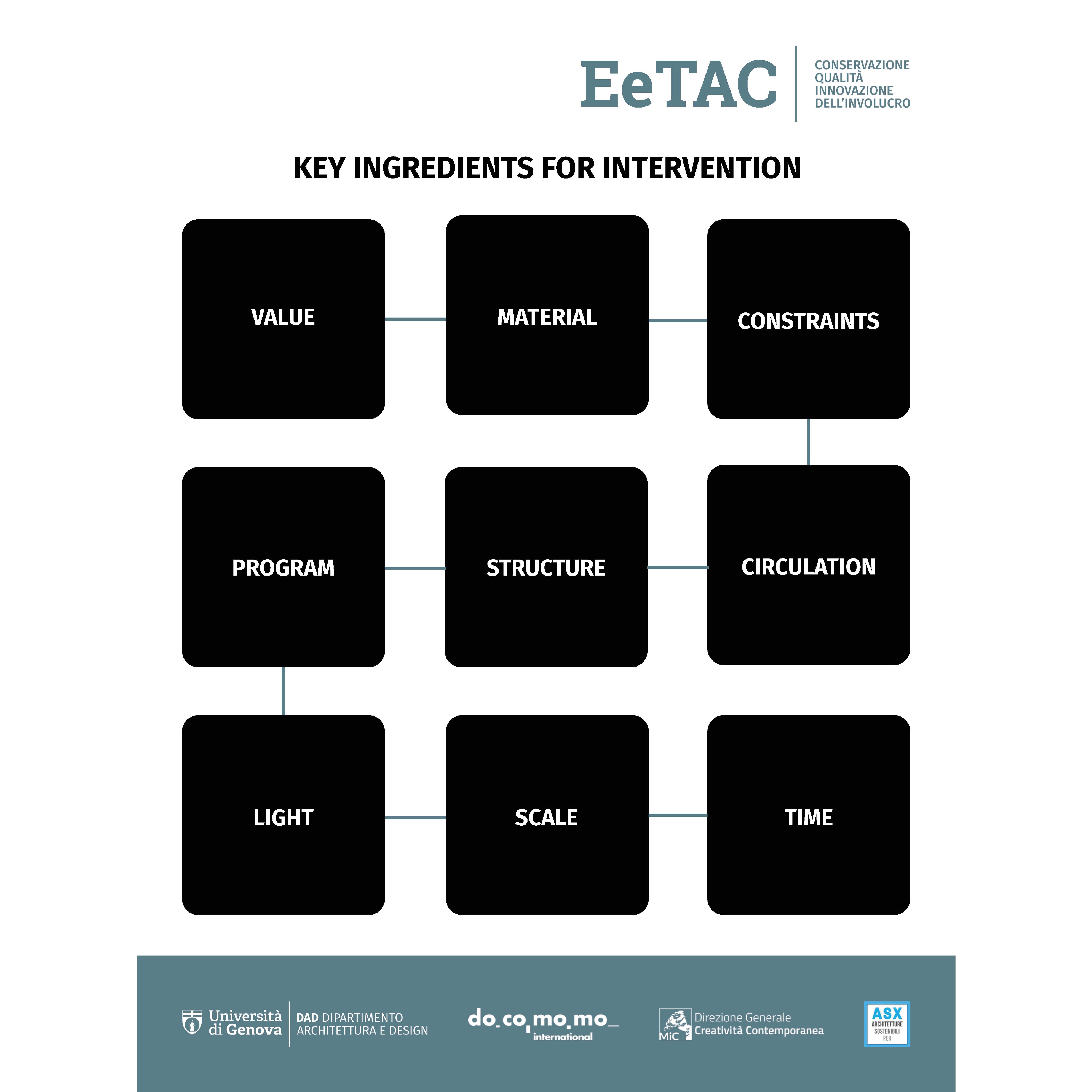
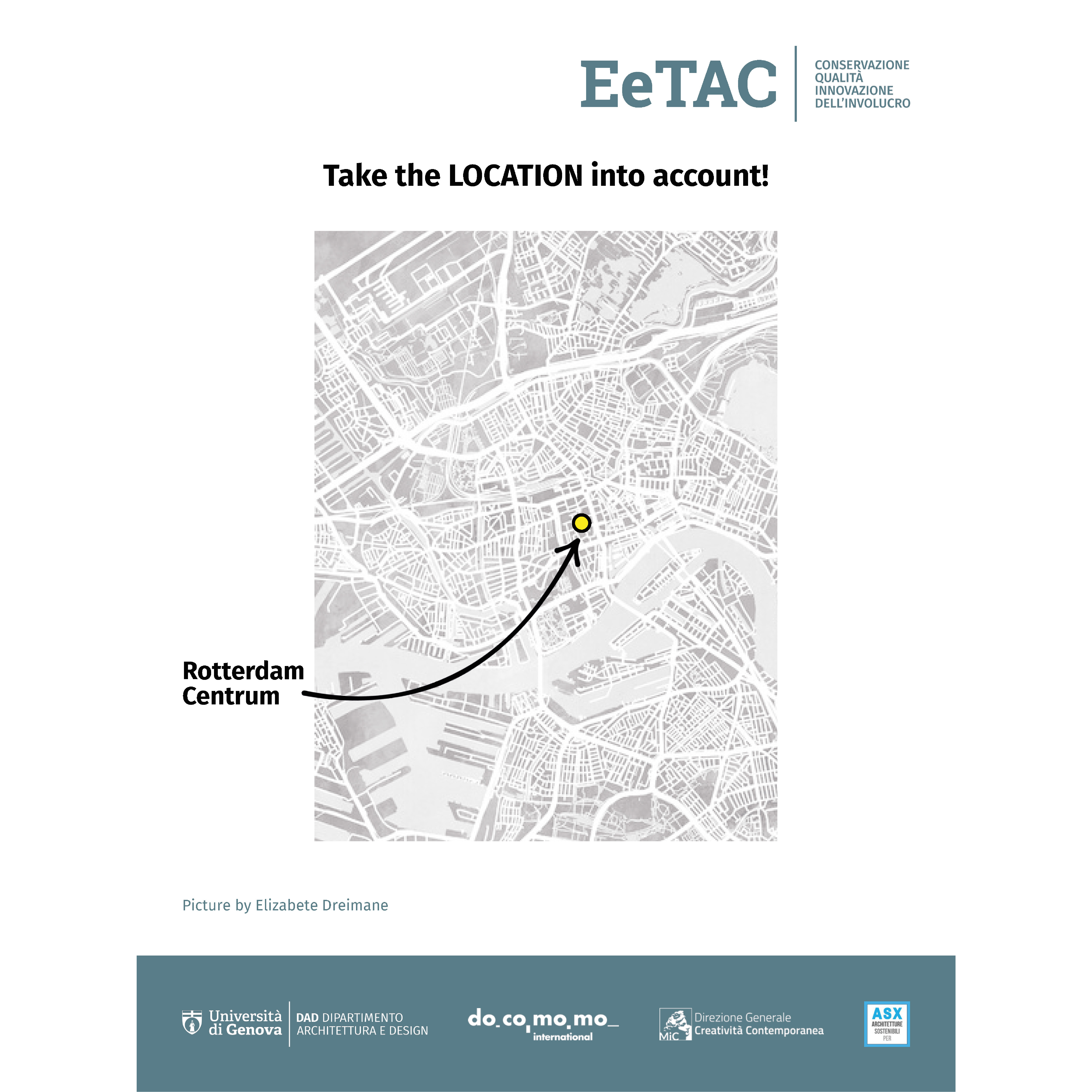
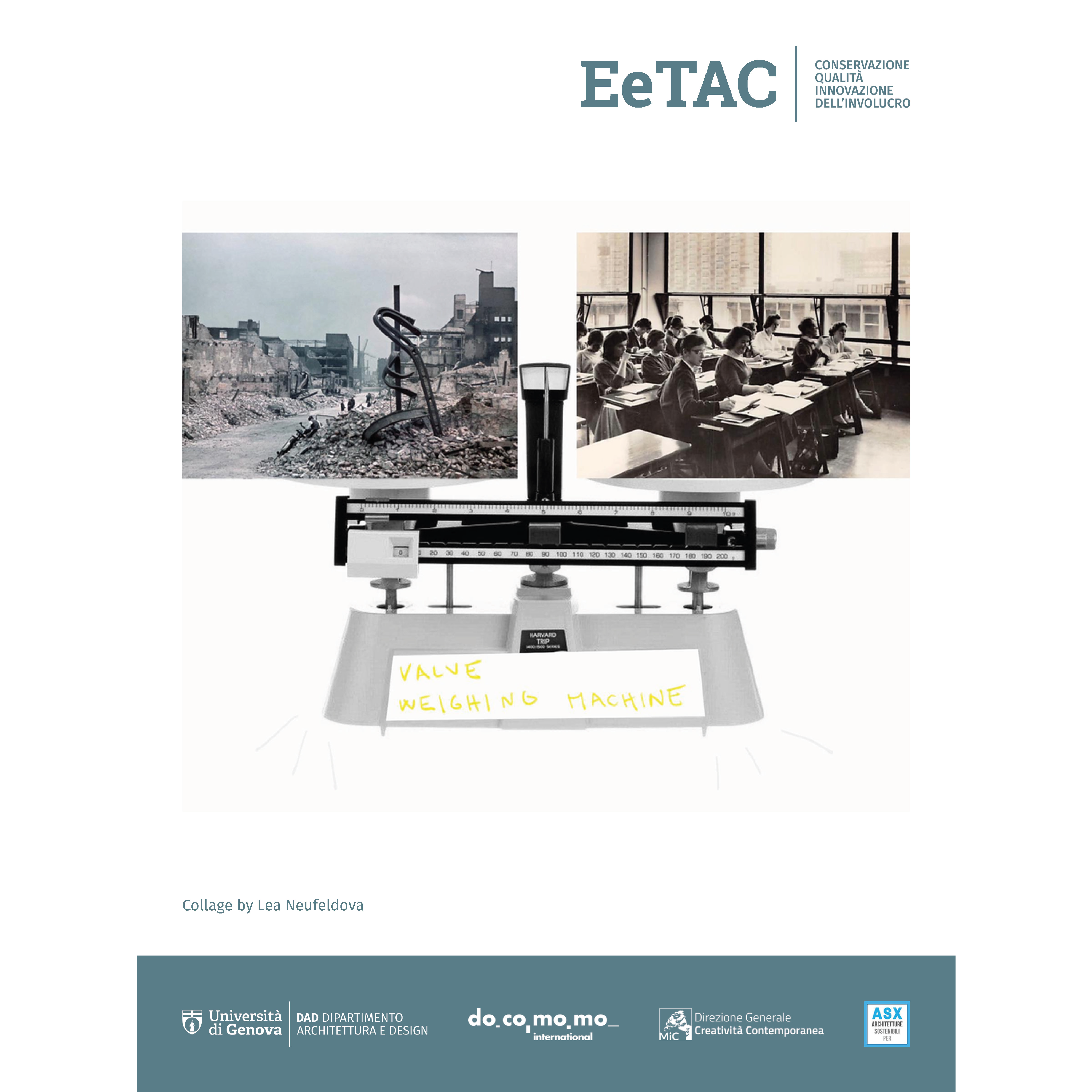
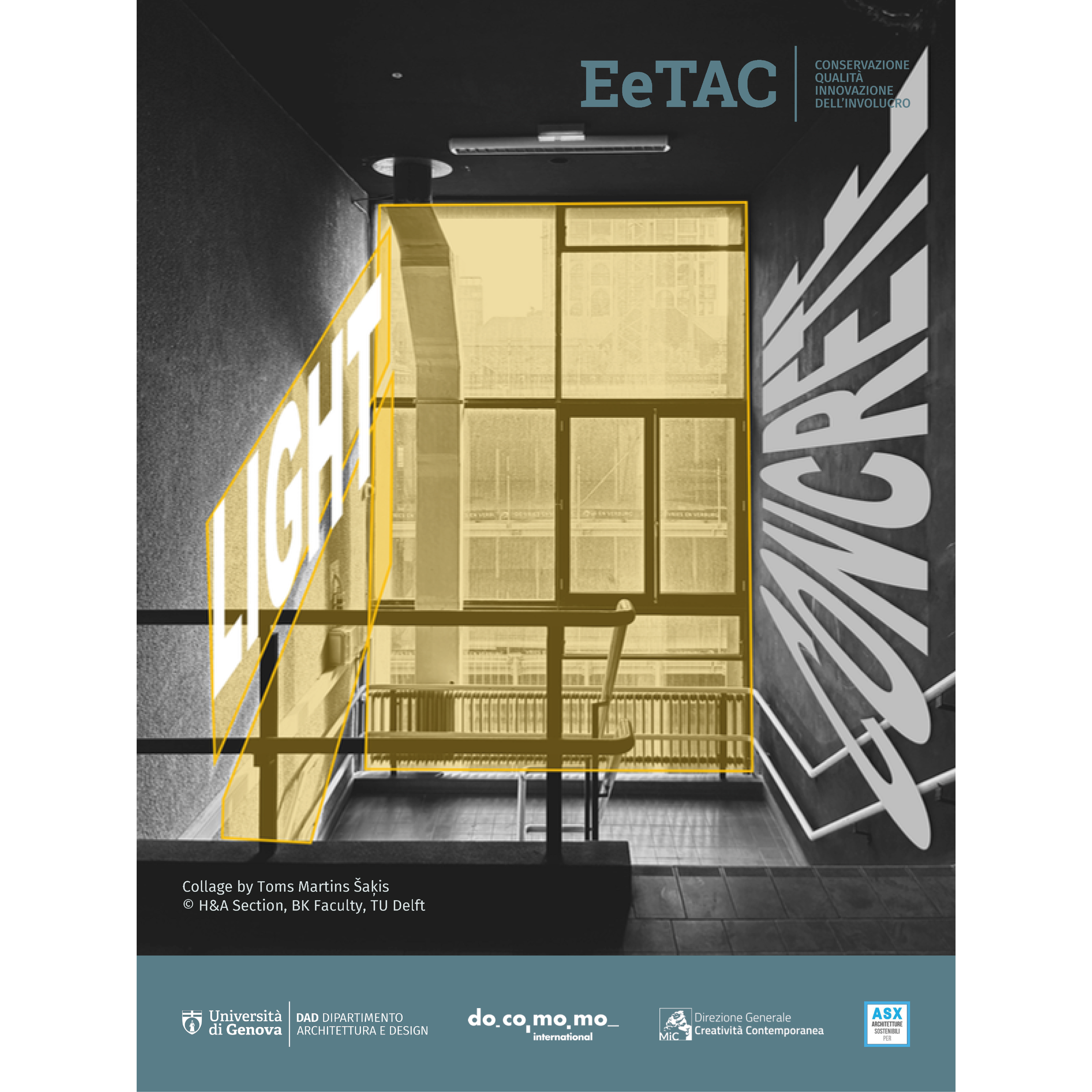
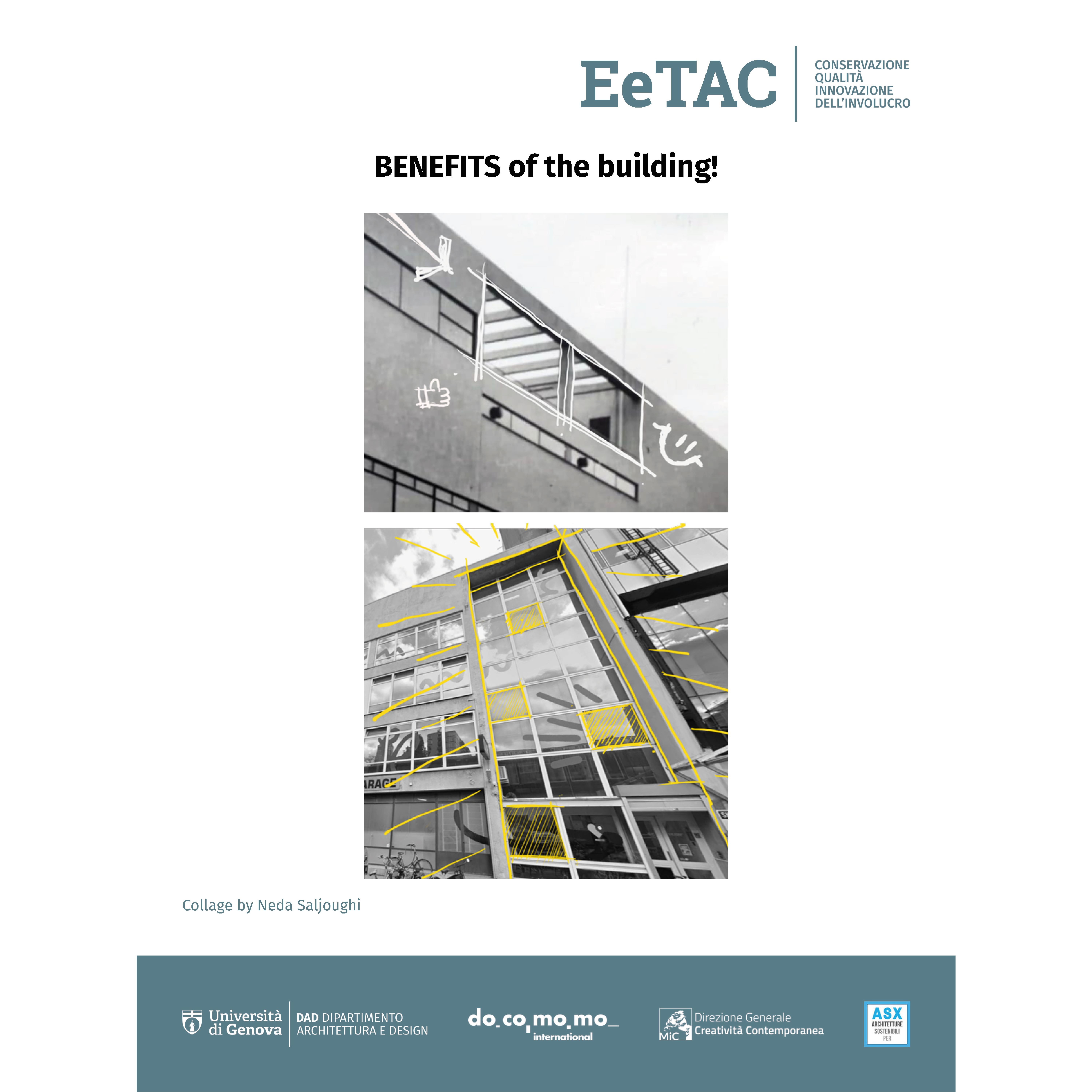
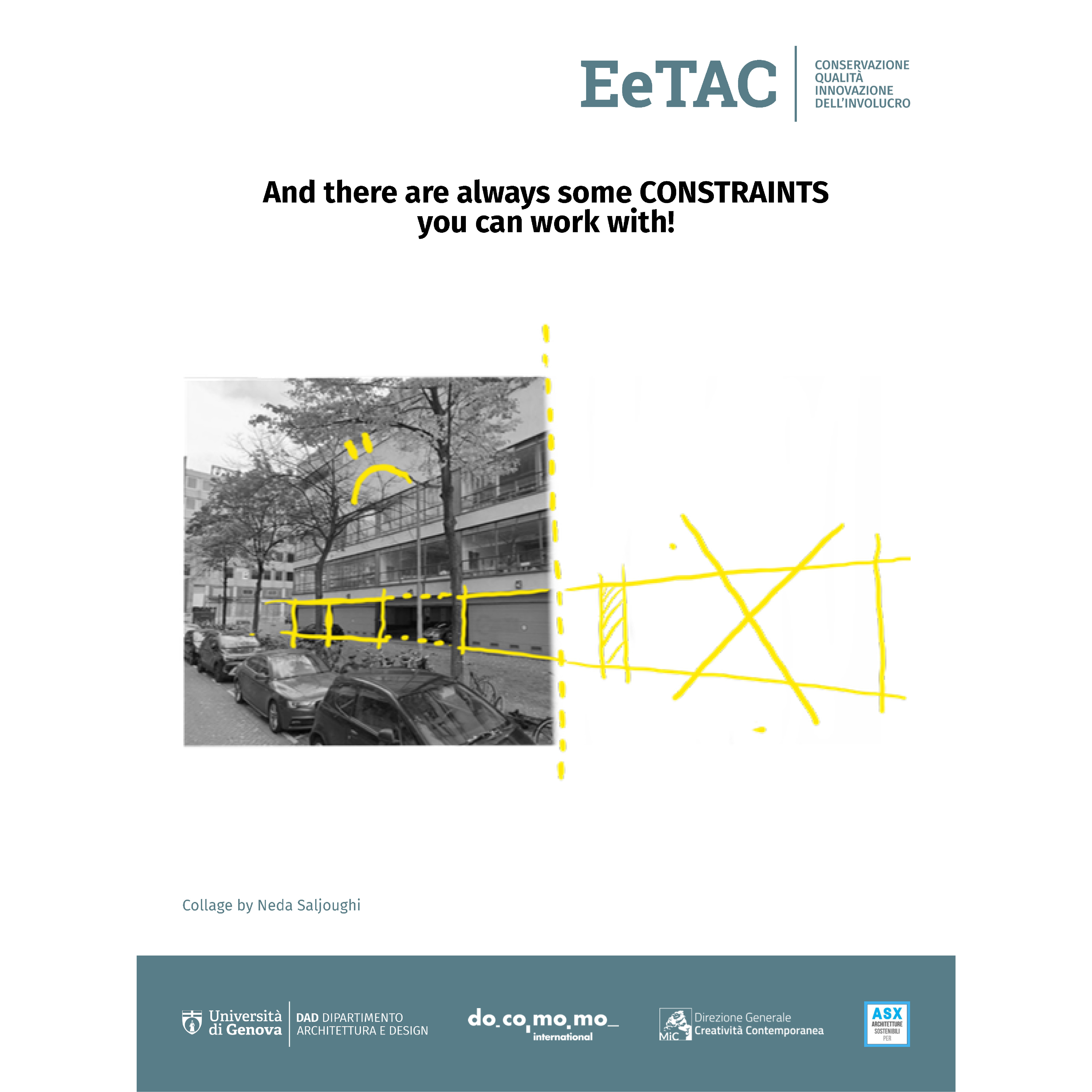
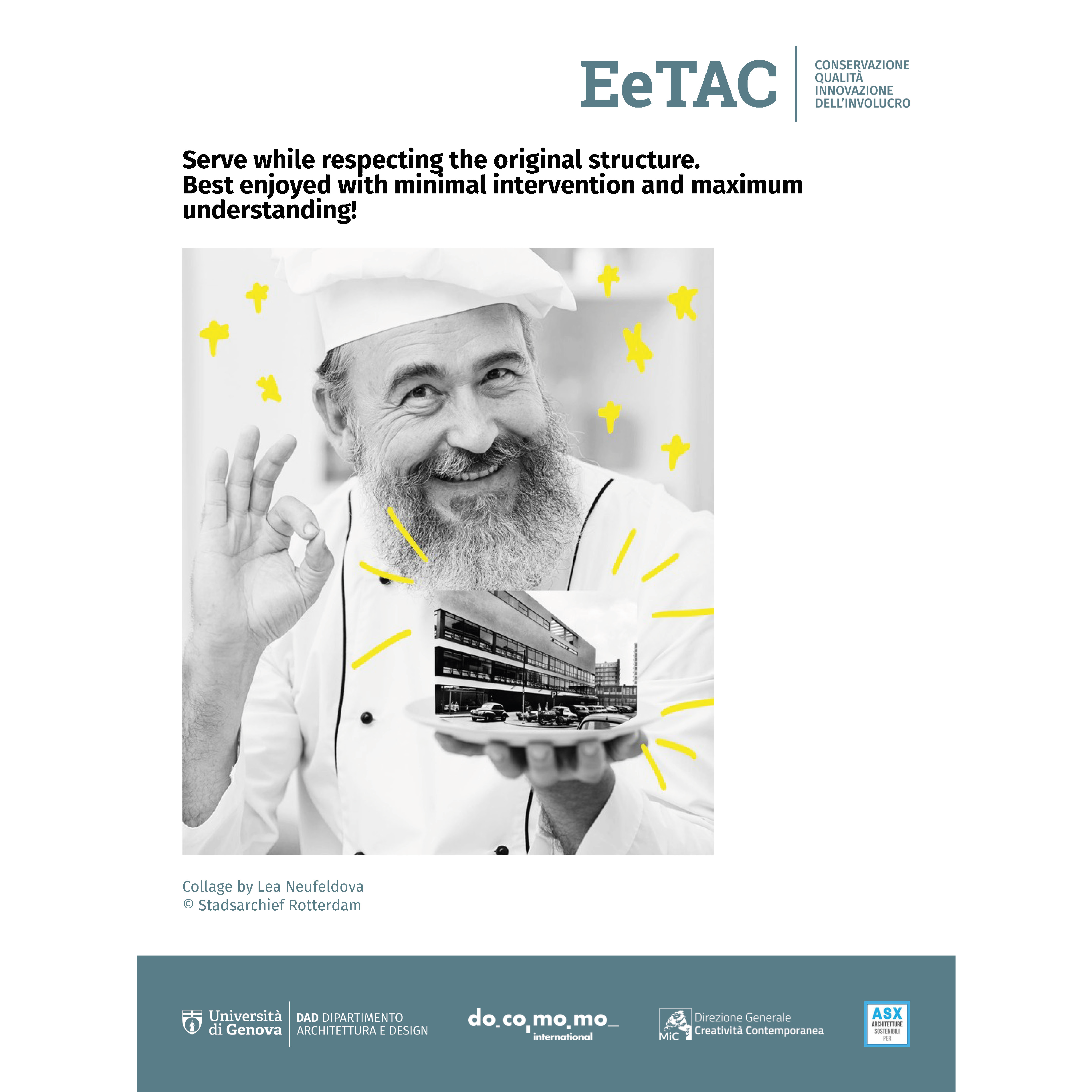
This carousel presents a framework for adapting a modernist façade through adaptive reuse. Instead of proposing a final design, we define a set of “ingredients” that guide the transformation process. By analysing values, material authenticity, and current performance needs, we explore how the façade can be preserved, adapted, and extended to support a new cultural function. The aim is to balance heritage and change, respecting the building’s identity while making it future-proof. We believe that a good intervention does not replace the past; it builds on it.
Keywords: design process, adaptive reuse, transformation
GROUP 06
Studenti: Yacine Azzouni, Mahdieh Chehrazi, Mahmoud Elkafrawy, Negar Ghodrati, Nima Hojati, Helia Kamalpour, Nadjib Achour Mohamed, Ahmad Othman, Rasa Rahmani
Restoring Balance
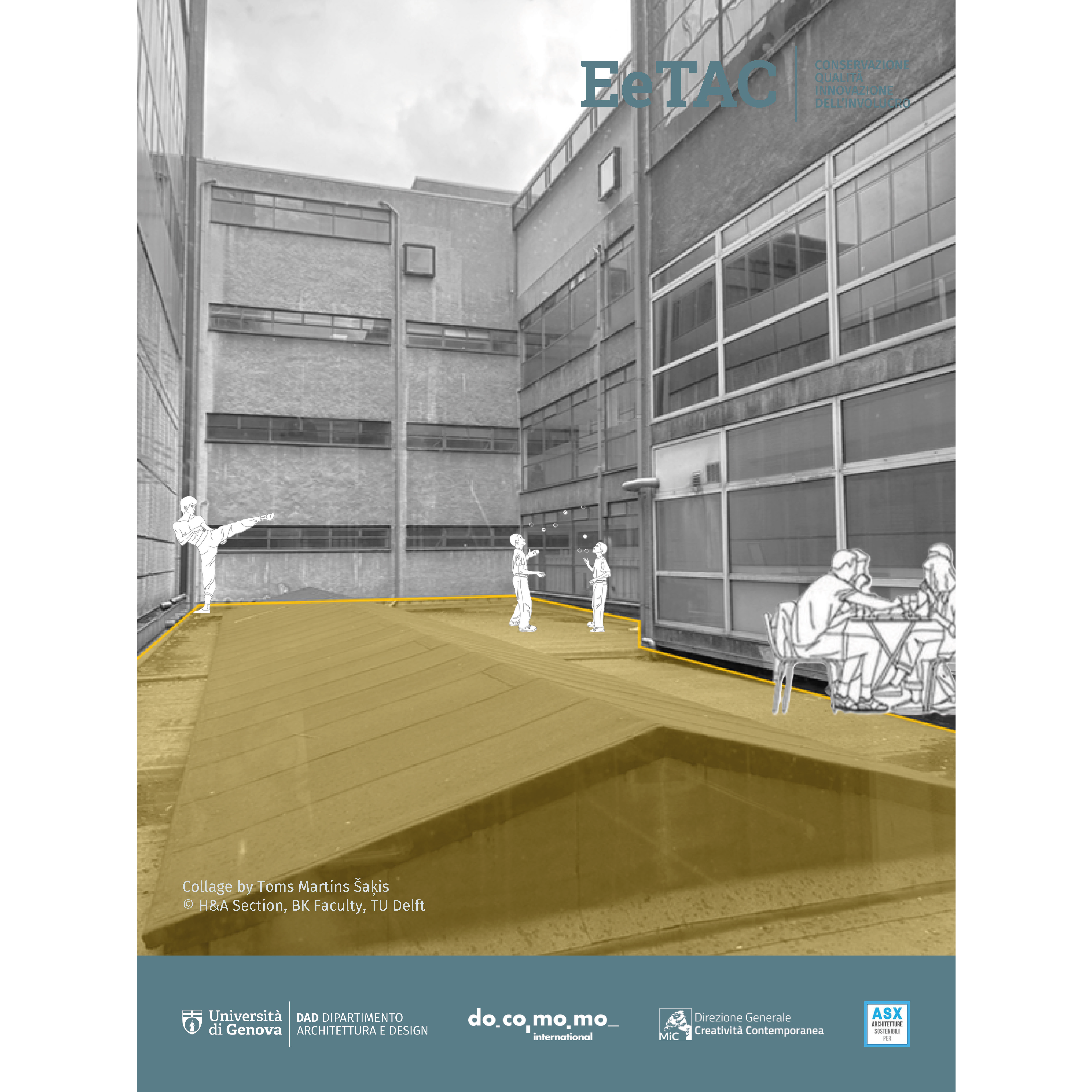
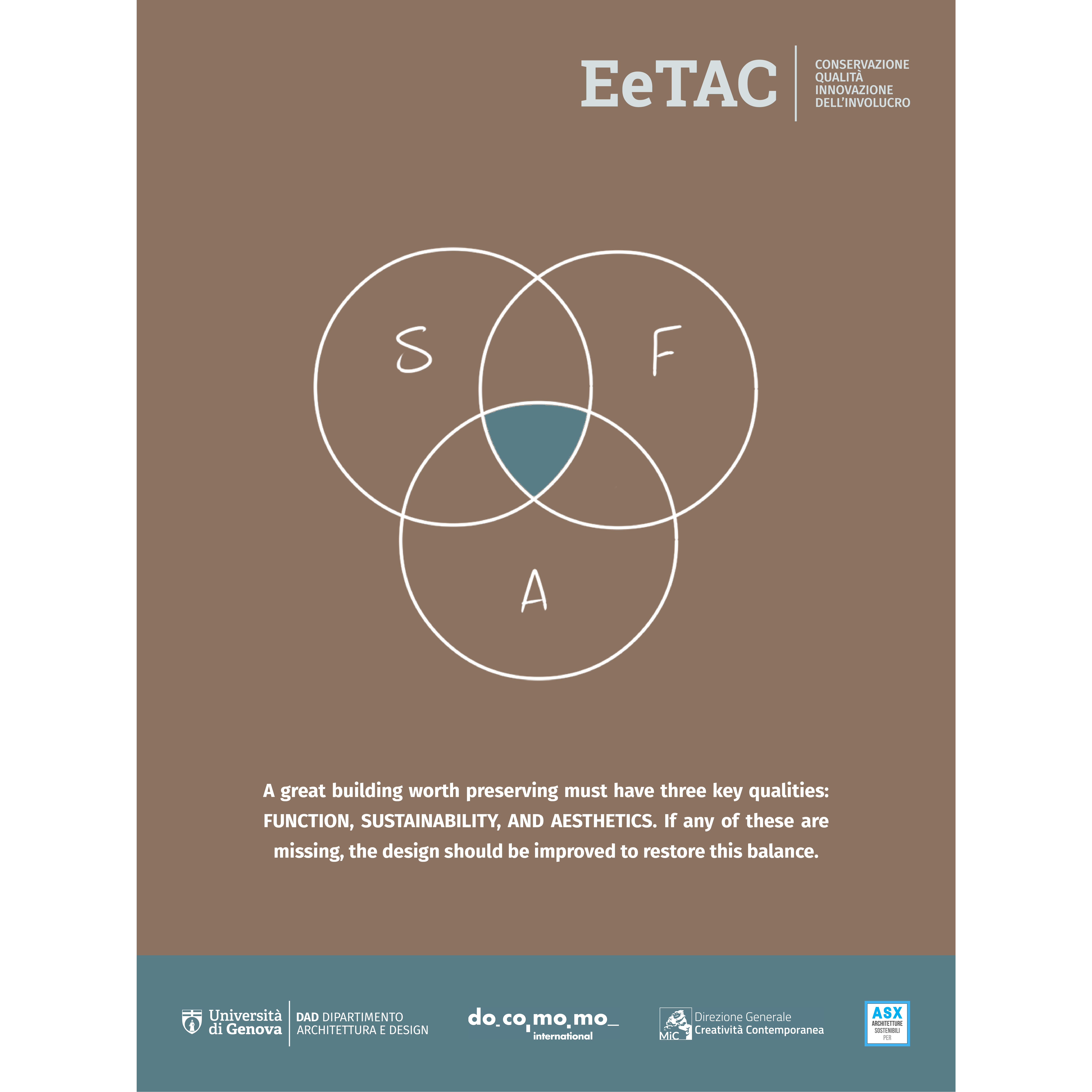
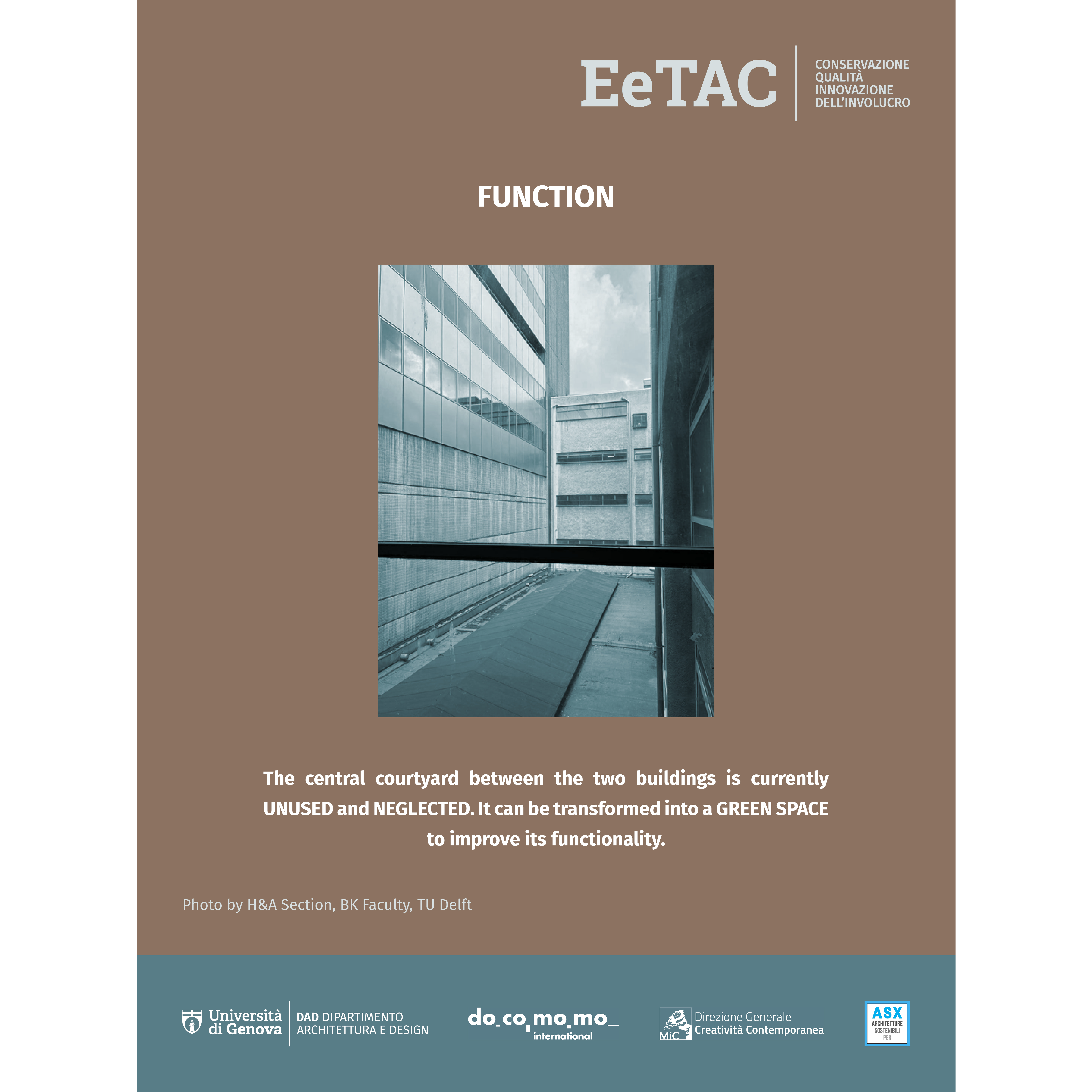
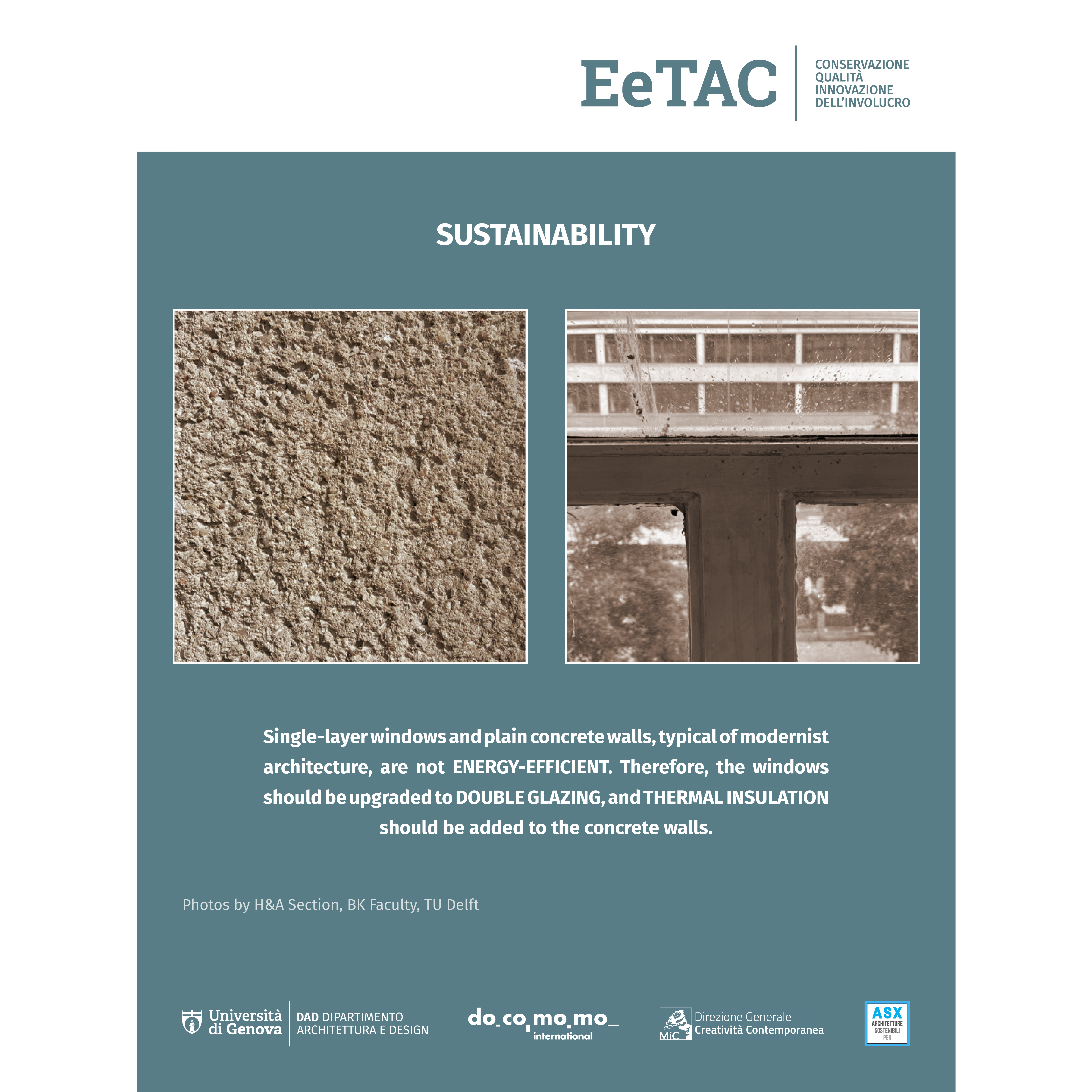
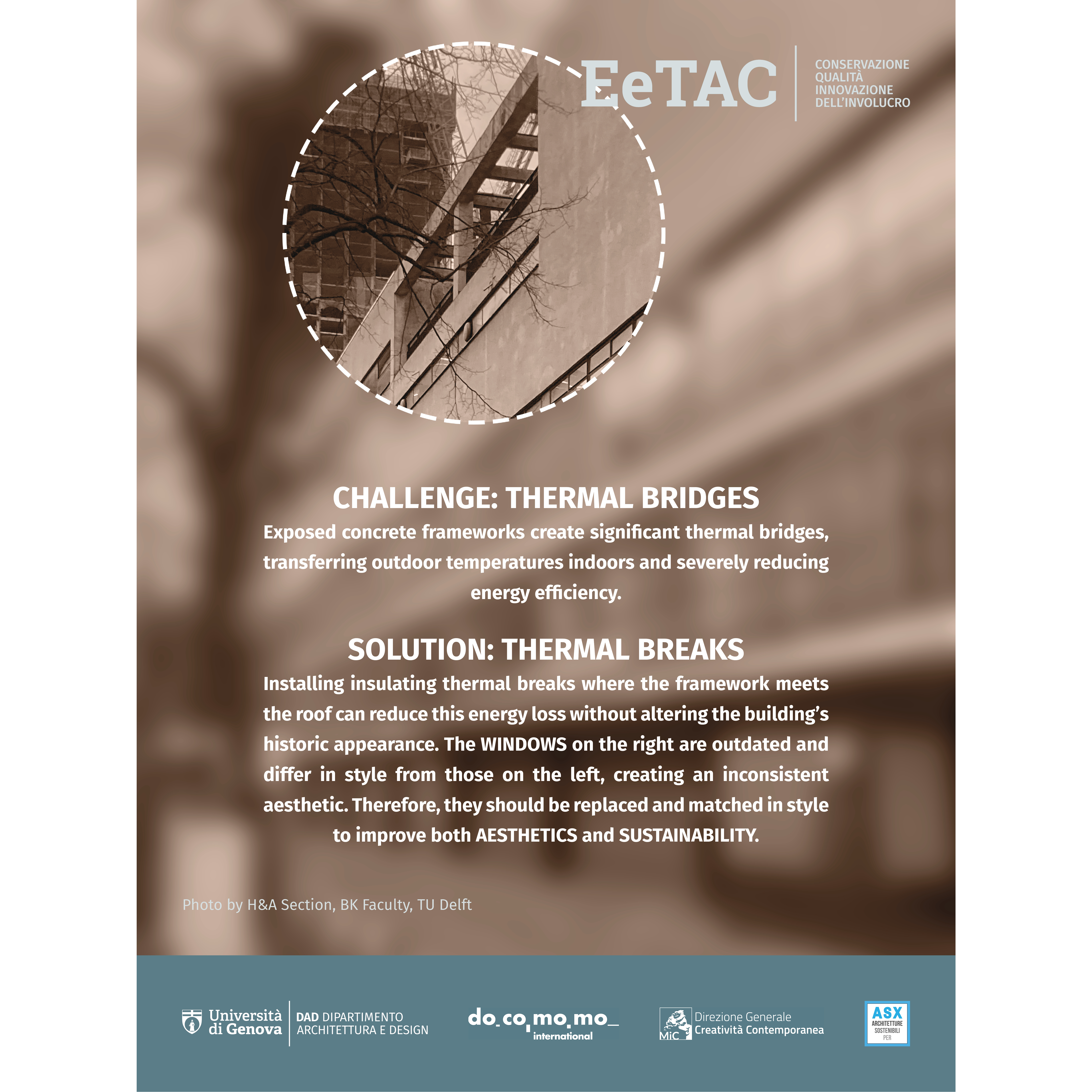
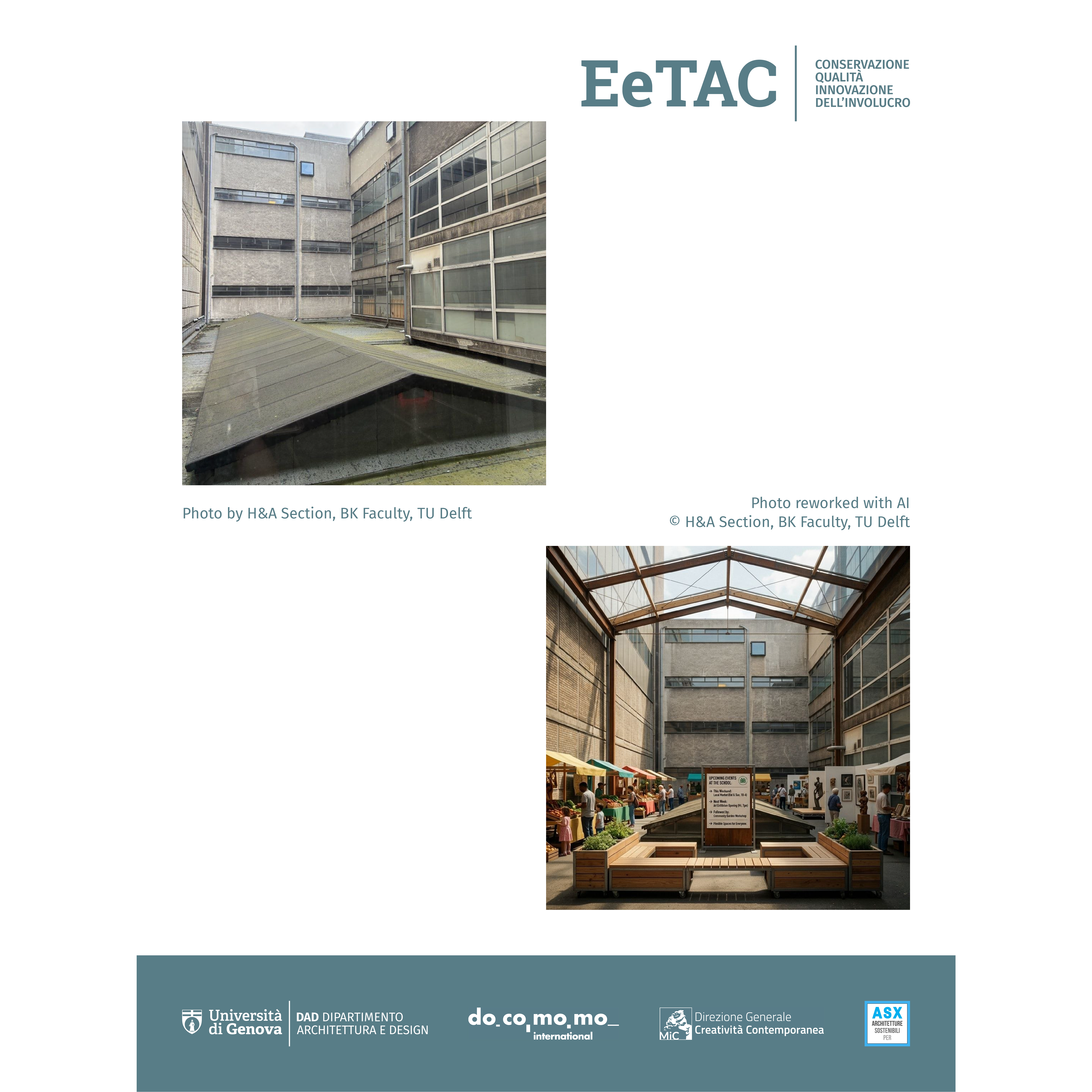
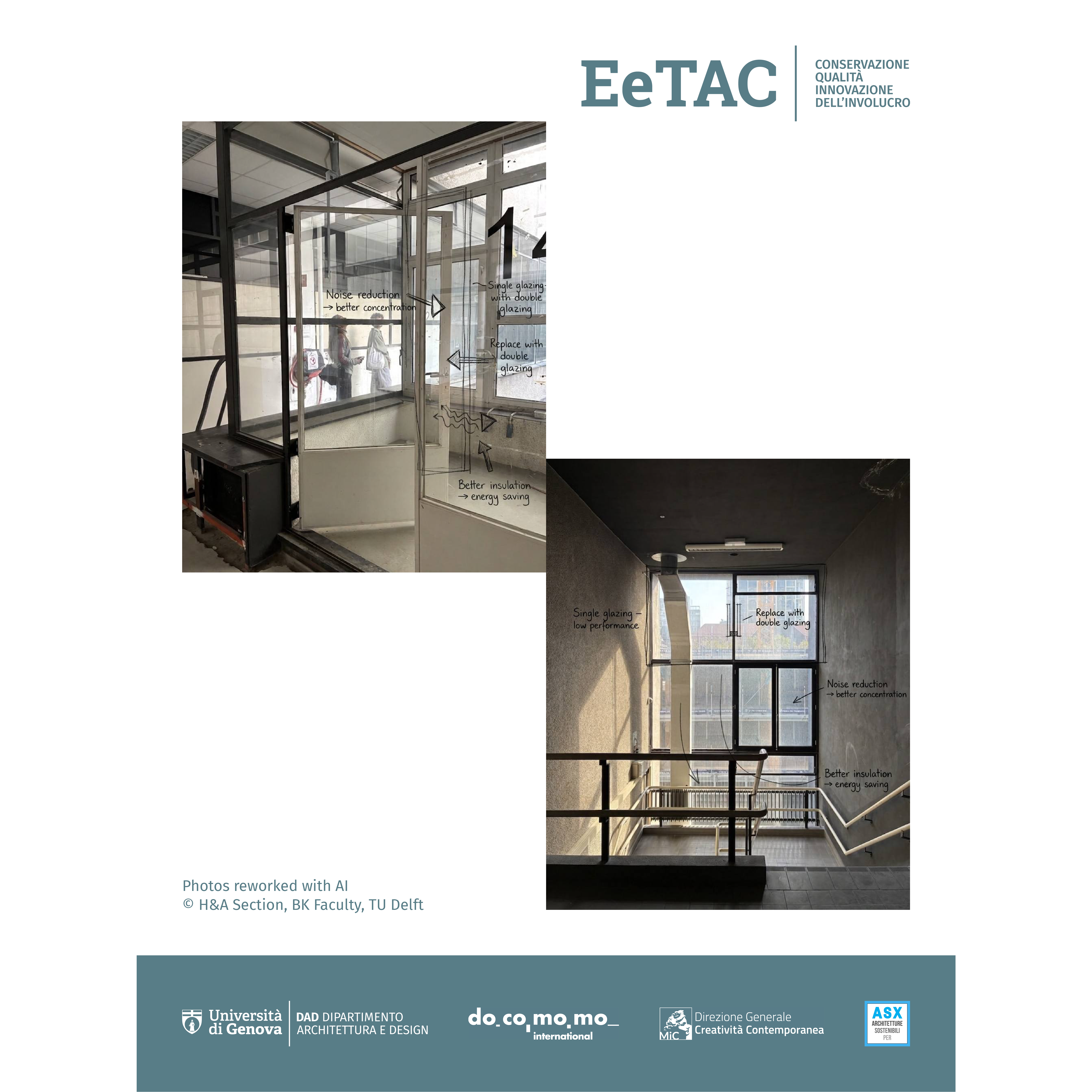
A great building worth preserving must combine three qualities: function, sustainability, and aesthetics. If one is missing, the design should be improved carefully to restore balance and value. The central courtyard between the two buildings is currently neglected and unused; it can be redesigned as a green shared space for relaxation, gathering, and daily activities. Single-layer windows and plain concrete walls, common in modernist architecture, waste energy. Windows should be replaced with double glazing, and thermal insulation should be added to the walls. Exposed concrete frameworks create thermal bridges, transferring outdoor temperatures indoors and reducing comfort and efficiency. Installing insulating thermal breaks where the framework meets the roof can reduce energy loss while preserving the historic exterior appearance. The windows on the right are outdated and visually inconsistent with those on the left. Replacing them with matching designs would improve aesthetics, comfort, sustainability, and long-term building performance.
Keywords: building retrofitting, energy efficiency, architectural sustainability


GROUP 07
Studenti: Jessica Beimdick, Amir Kooshan Fotoohi, Farnaz Ghadam Zadeh, Yeganeh Ghamatitavil, Ali Hajian, Md Saiful Islam, Pardis Mardan, Ilinca Neculae, Hasti Yousefi
Framing the Future
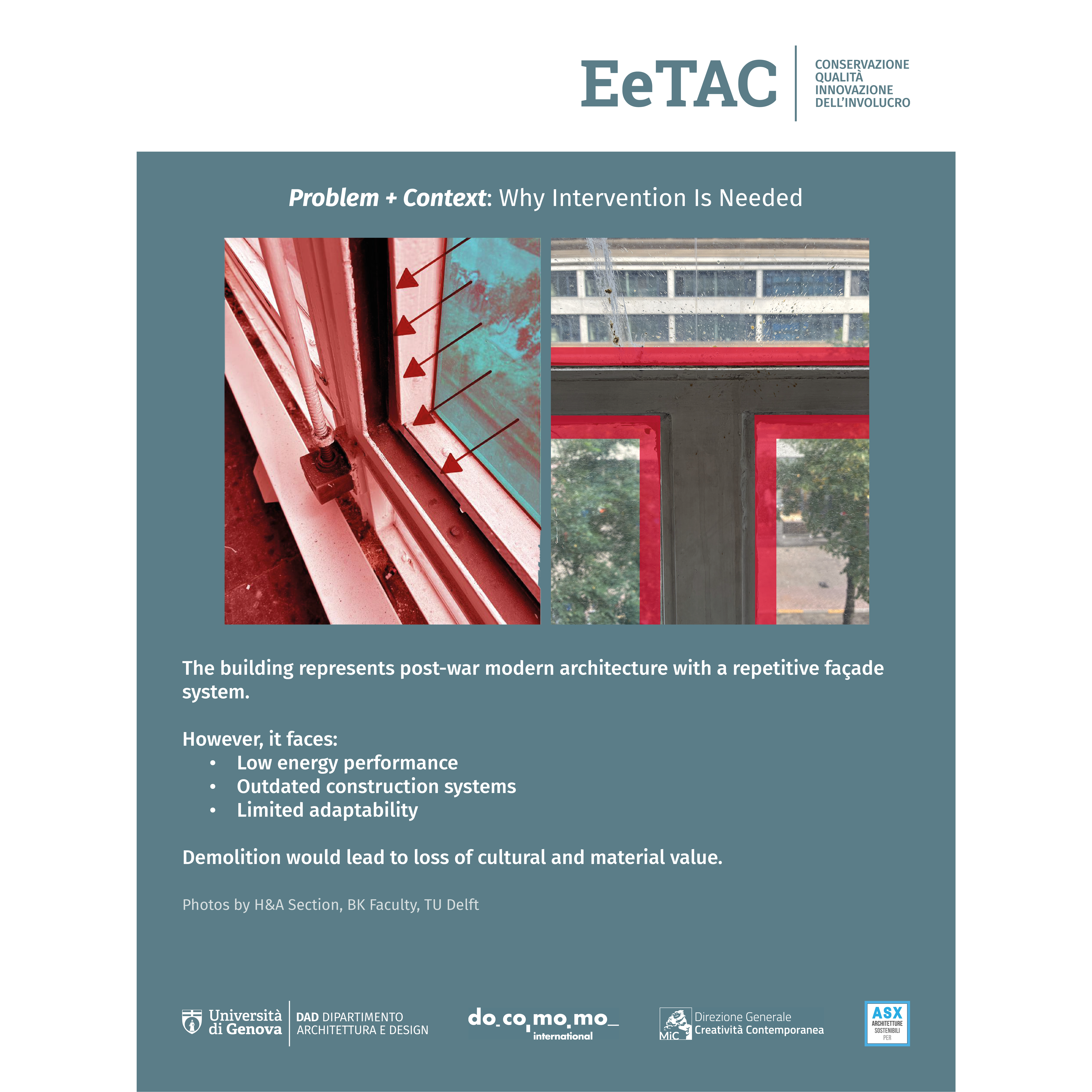
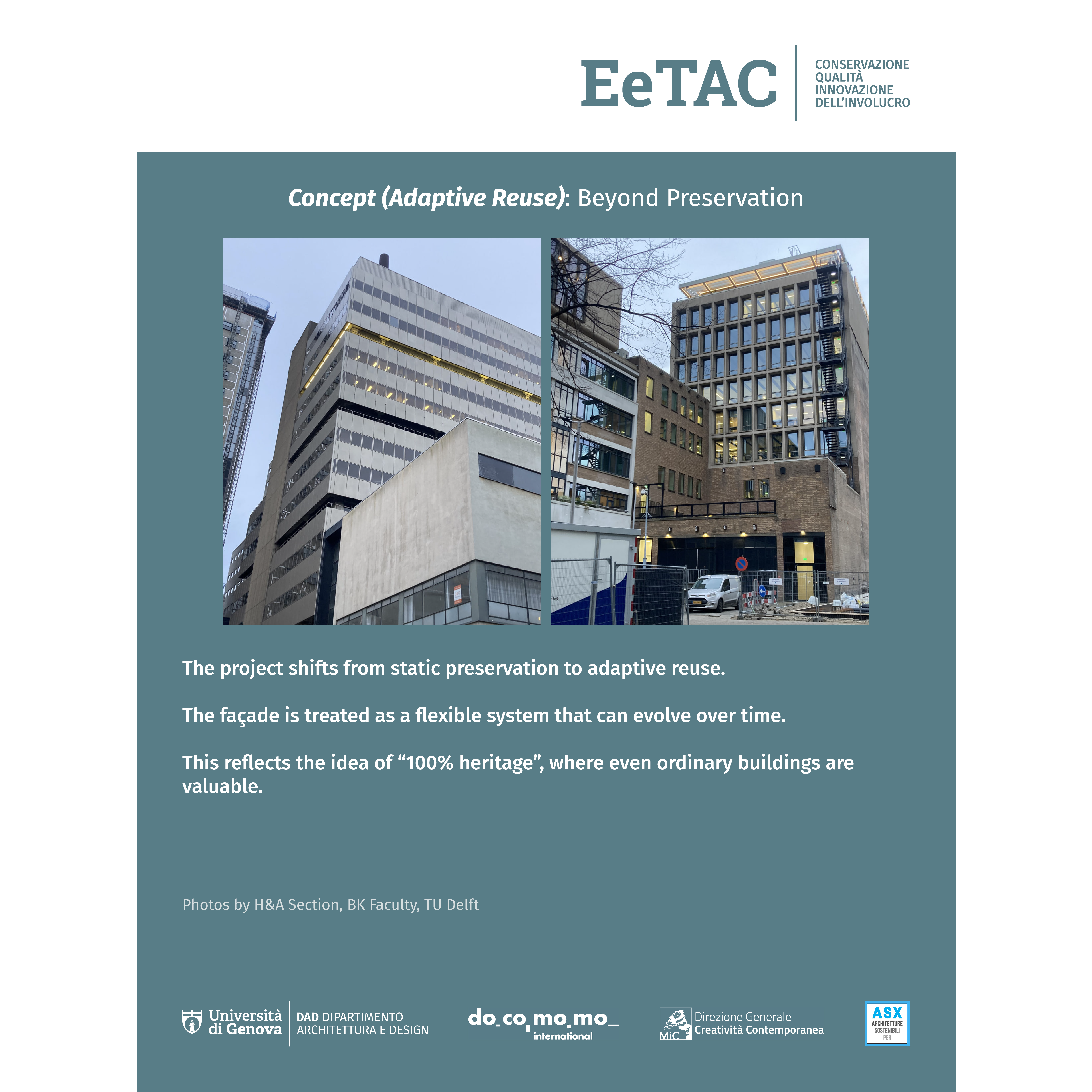
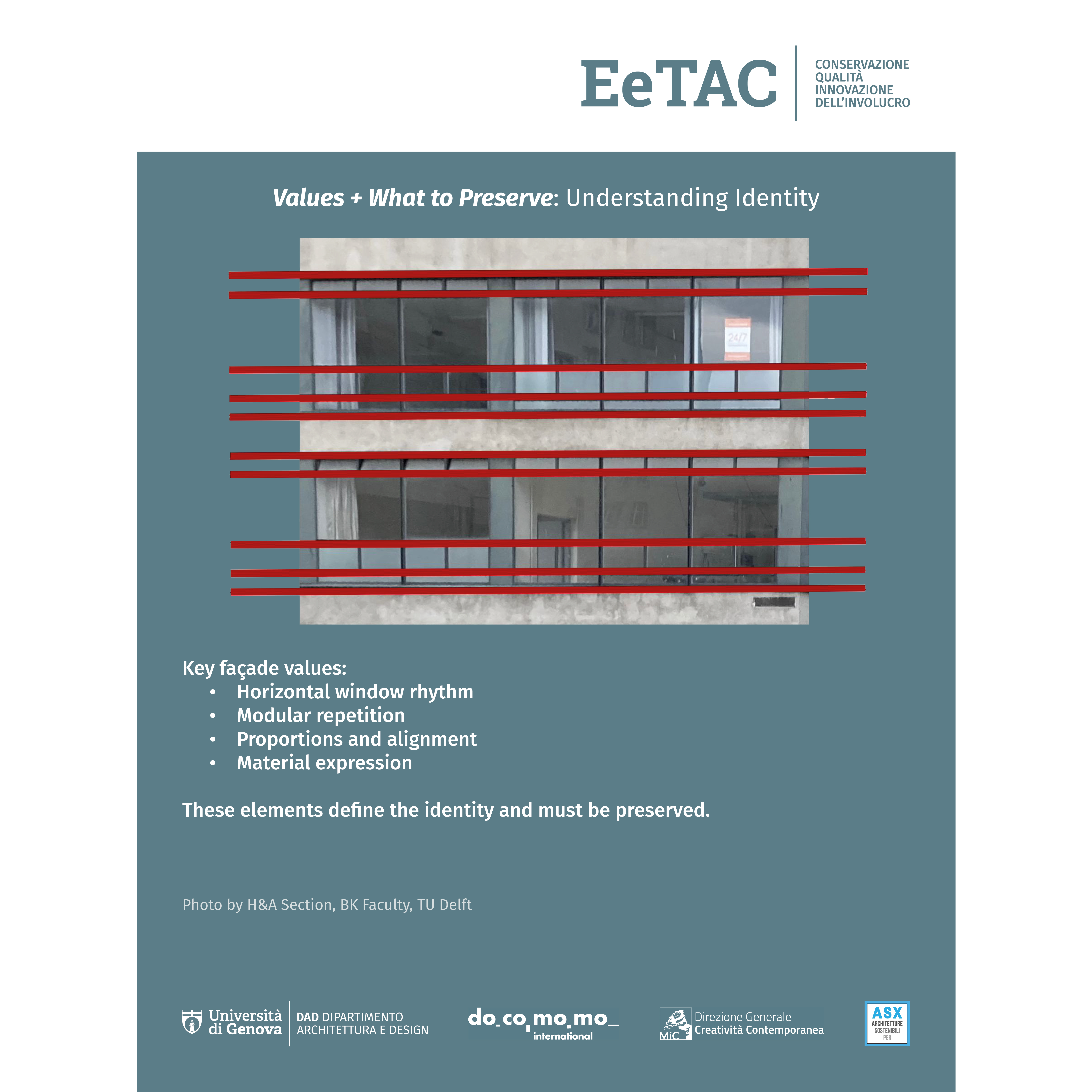
Our proposal redefines the conservation of the St. Lucia School in Rotterdam by shifting the focus from static preservation to a forward-looking adaptive reuse framework. Under the theme “Framing the Future,” we treat the building’s façade not as a frozen historical artifact, but as a flexible, high-performance system capable of evolving with contemporary environmental and social needs. By analysing the building’s inherent DNA, specifically its horizontal window rhythm and modular repetition, we identify the essential values that must be preserved to maintain its post-war modern identity. This approach mitigates the risks of low energy performance and functional obsolescence while preventing the cultural loss associated with demolition. Ultimately, our intervention advocates a “100% heritage” philosophy, in which the thoughtful adaptation of ordinary structures becomes a sustainable tool for urban continuity.
Keywords: adaptive reuse, façade transformation, post-war modernism



GROUP 08
Studenti: Elaheh Aghamolaei, Yamama Khalil, Amirreza Namdan, Mohammadreza Rostami, Ibrahim Sabri, Ashkan Shoari
A Preservation-Led Adaptive Reuse Strategy
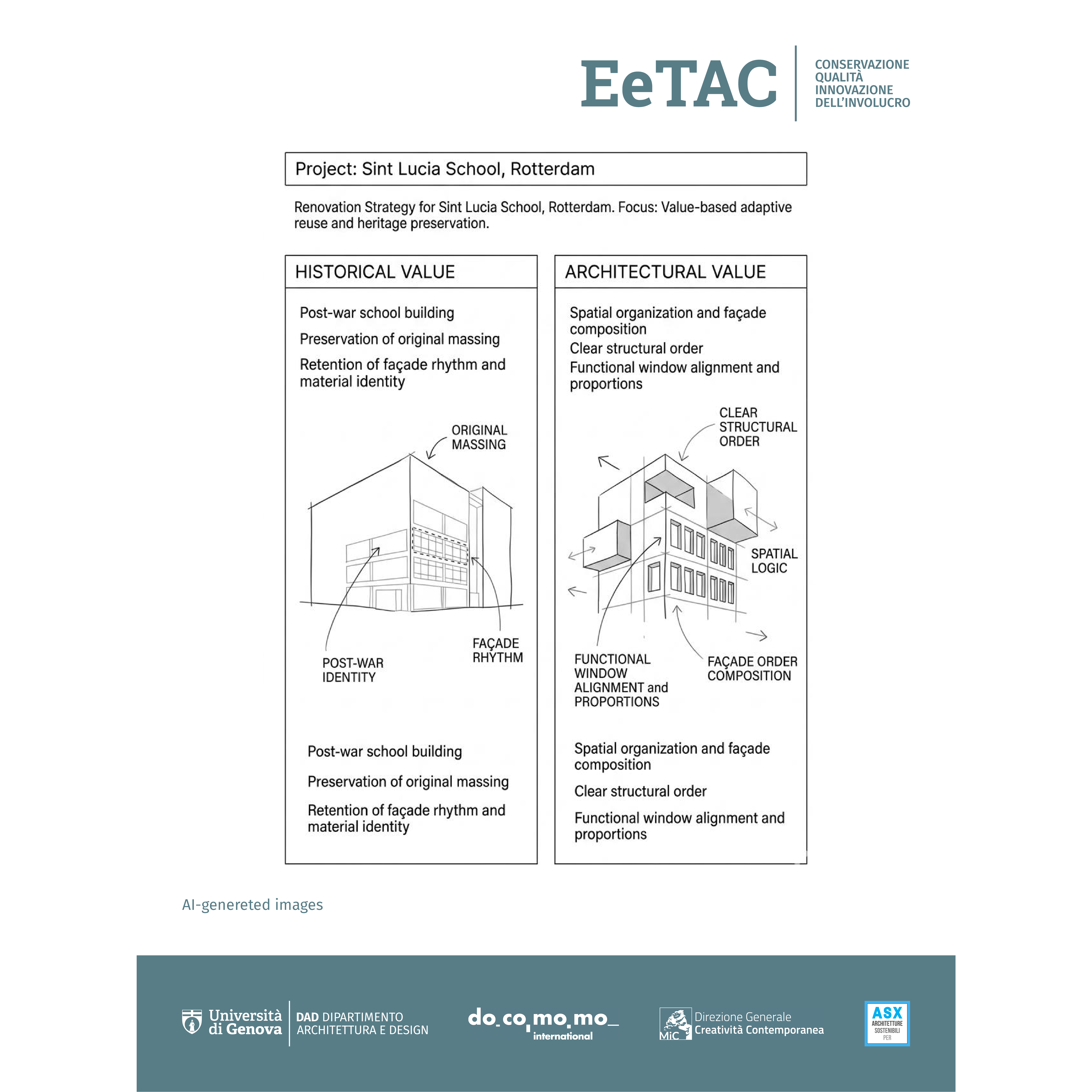
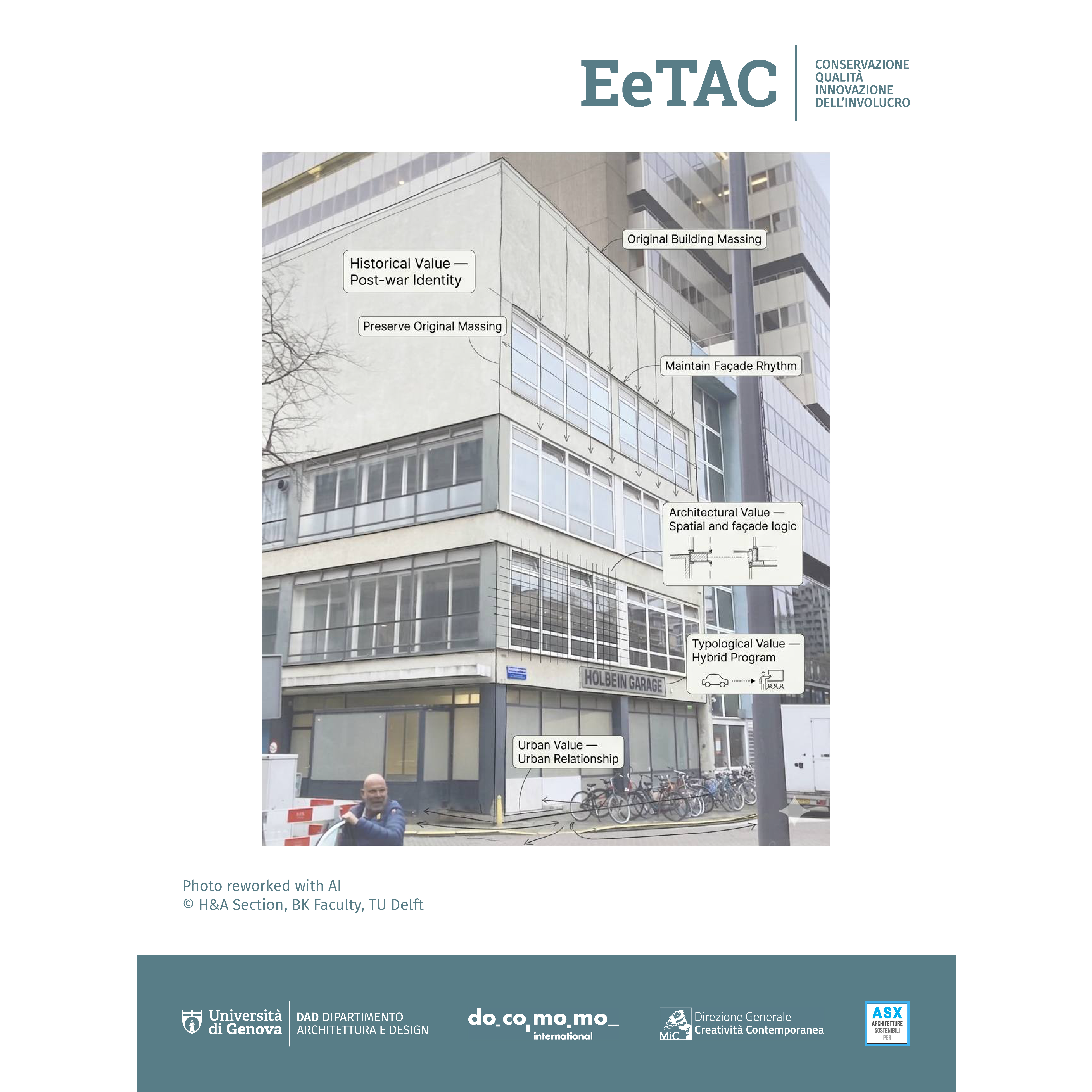
This proposal adopts a preservation-led strategy, treating the Sint Lucia School as a living urban artifact rather than a static relic. By embracing its post-war modernist spatial logic, it prioritizes the building’s unique hybrid typology: the juxtaposition of educational and industrial spaces. To achieve this, it proposes minimal, reversible interventions, preserving the original massing and rhythmic façade while ensuring that all new additions remain lightweight and clearly distinguishable from the historic fabric. In addition, maintaining the U-shaped plan and natural lighting reinforces spatial continuity. Crucially, the proposal activates the ground floor as a public interface, transforming the formerly private learning environment into a vibrant social catalyst for Rotterdam. Guided by the “do no harm” principle, this adaptive reuse strategy ensures that the transformation of the school into a contemporary cultural hub enhances its heritage value while securing a sustainable functional future.
Keywords: adaptive reuse, heritage preservation, urban integration
GROUP 09
Studenti: Elaheh Aghamolaei, Yamama Khalil, Amirreza Namdan, Mohammadreza Rostami, Ibrahim Sabri, Ashkan Shoari
Reading Values Before Redesigning Architecture
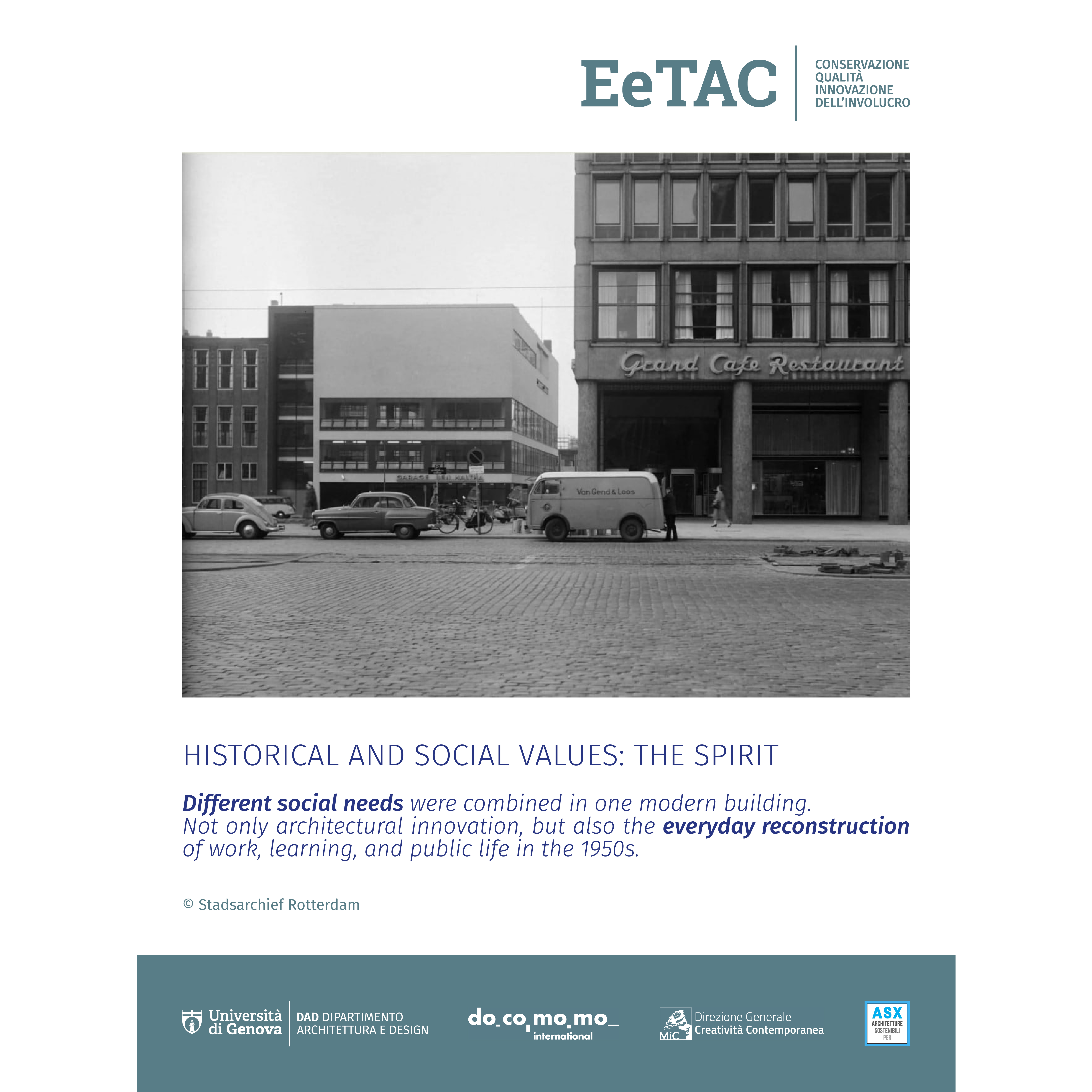
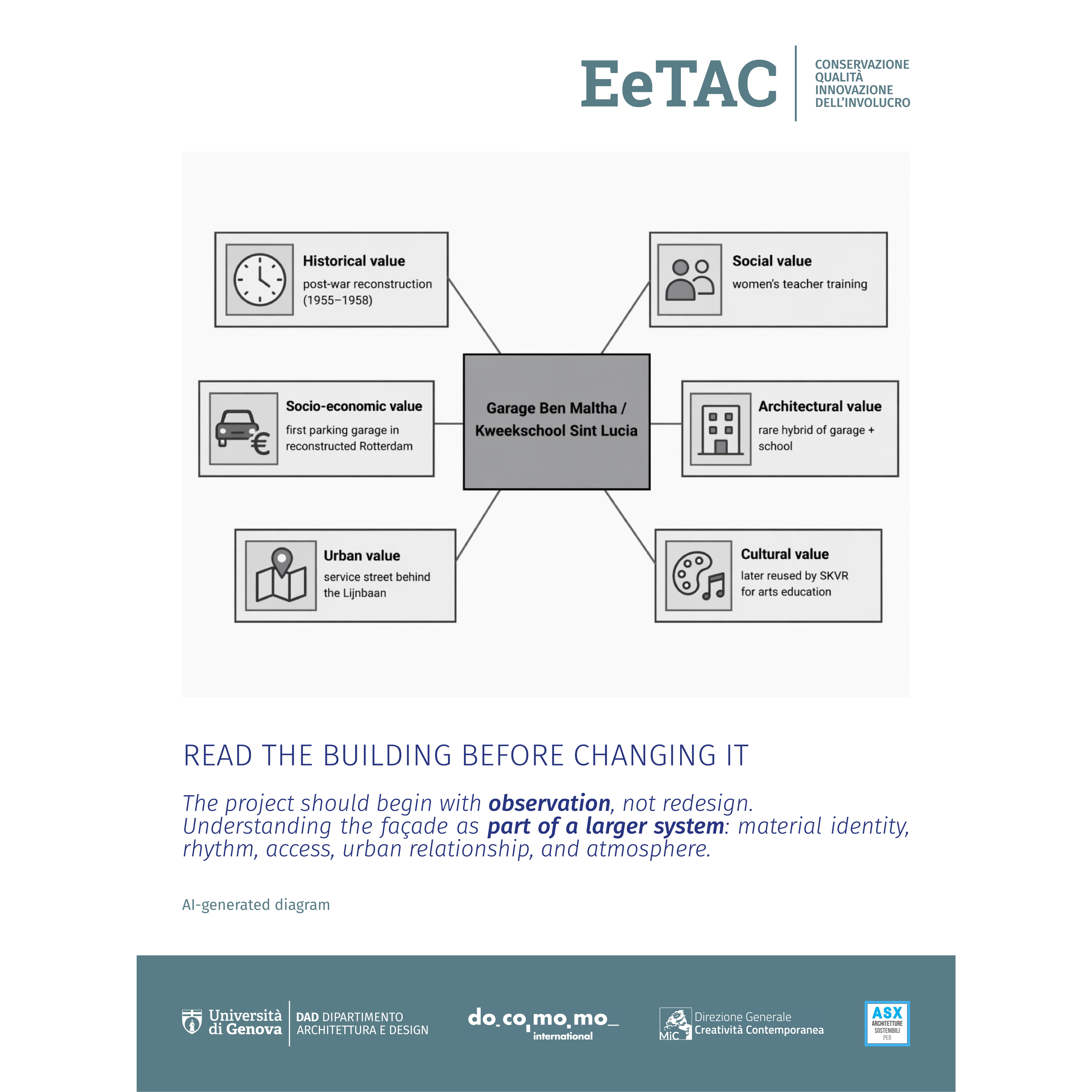
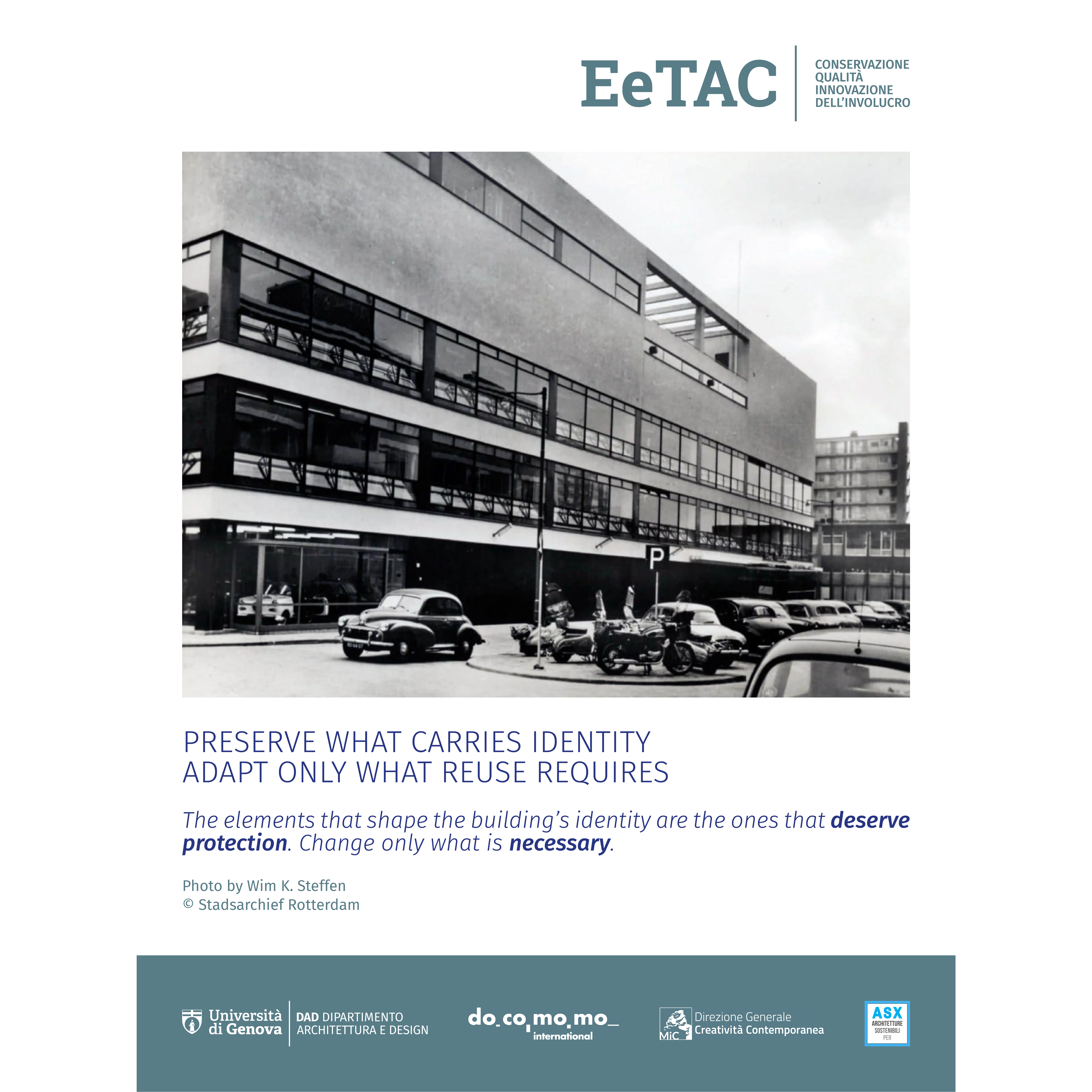
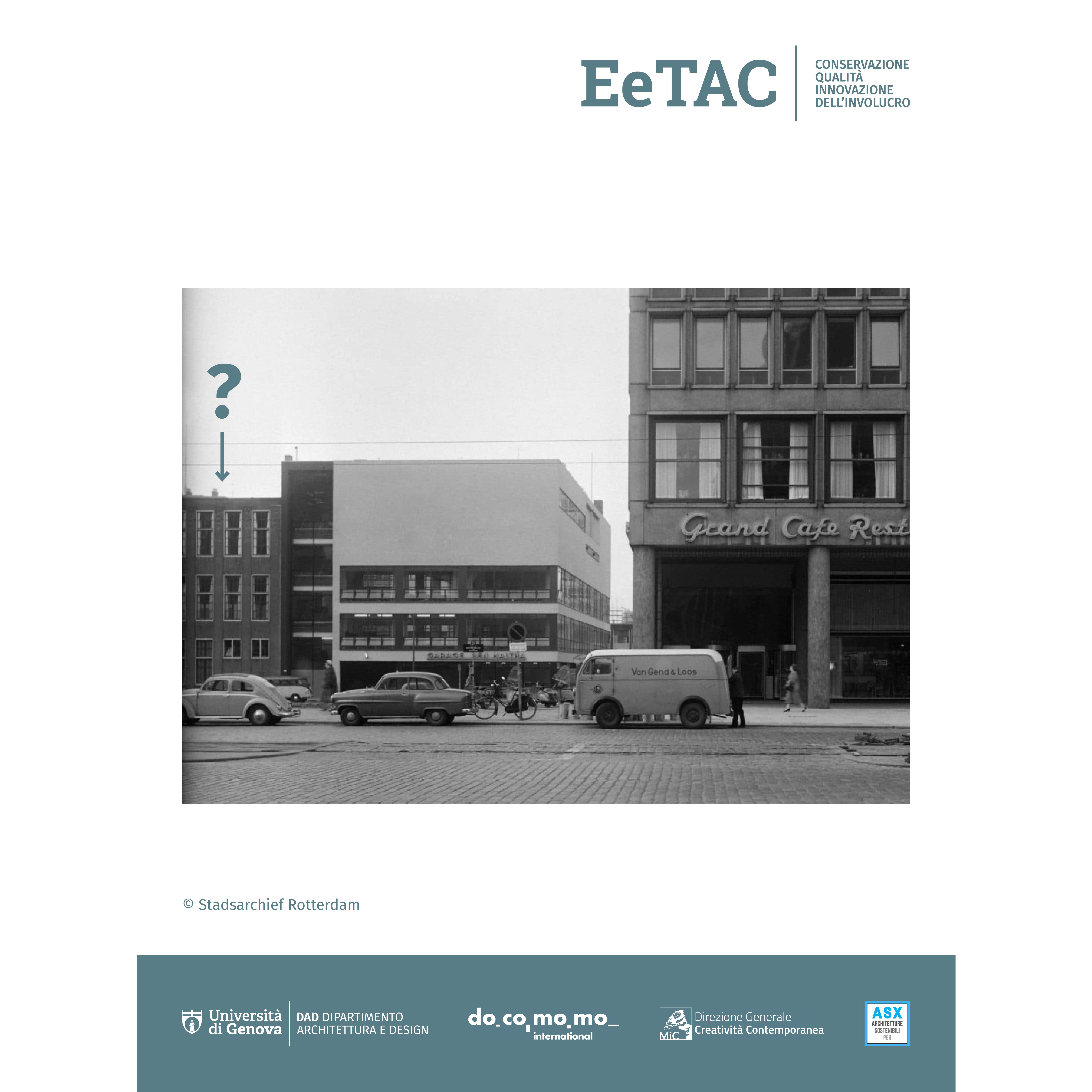
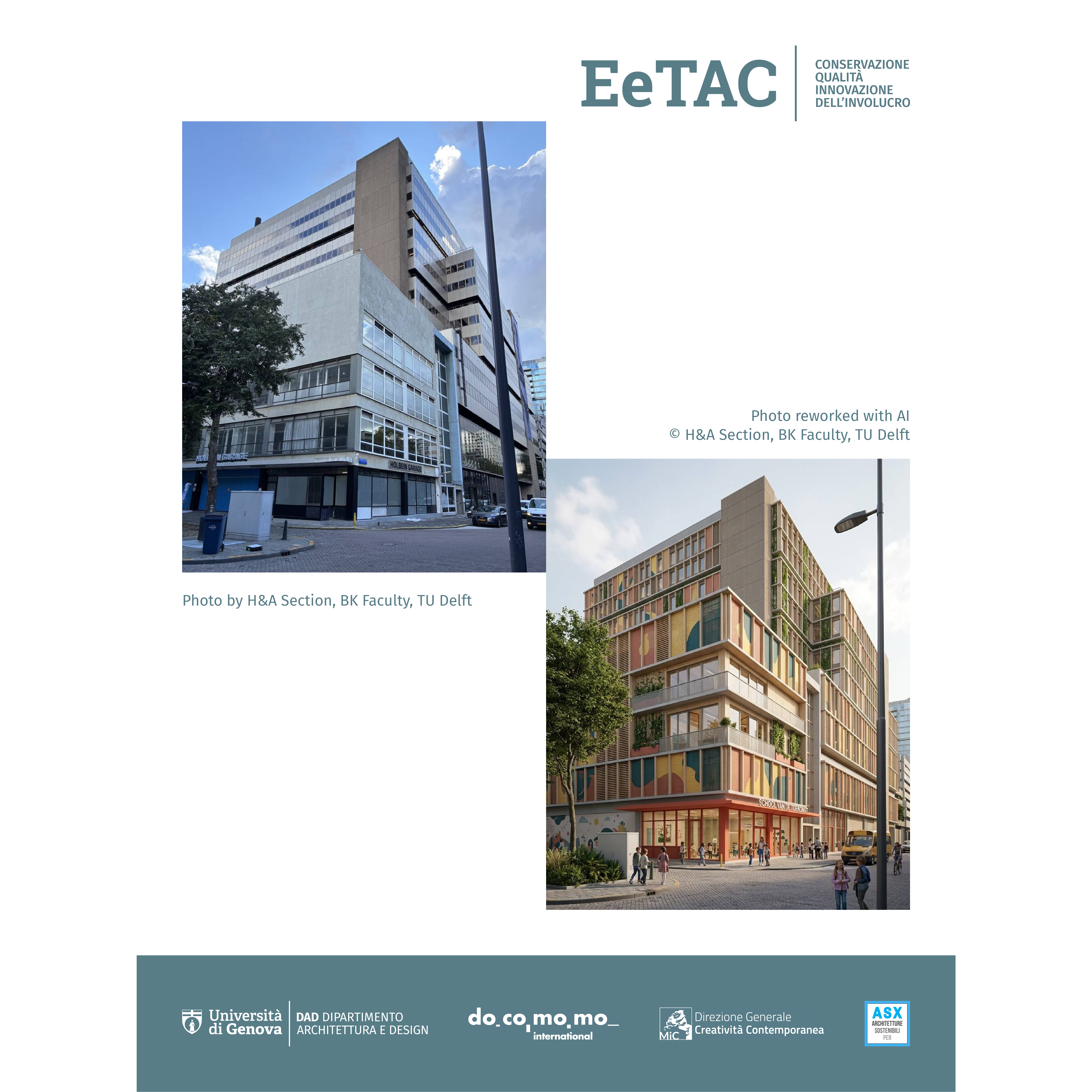
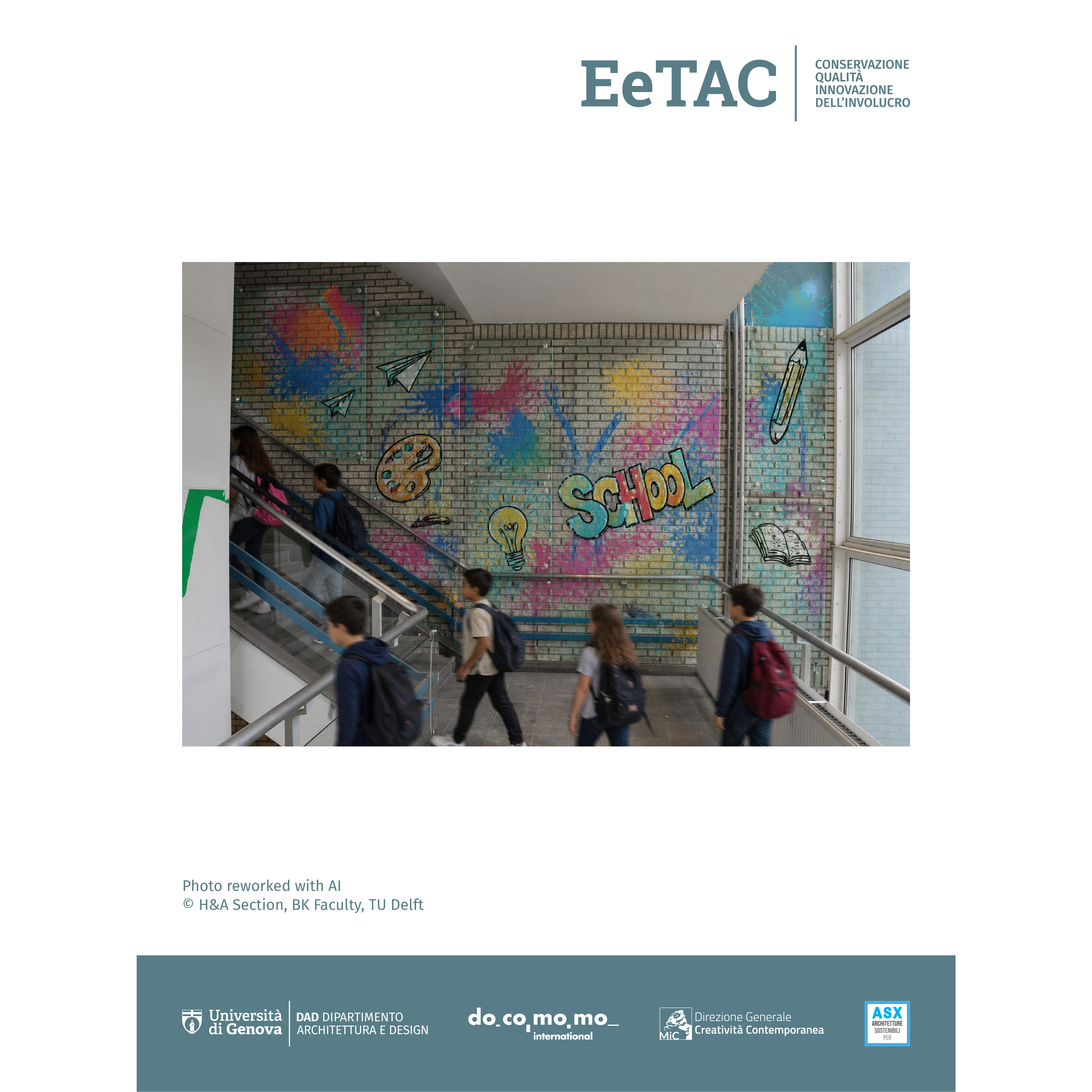
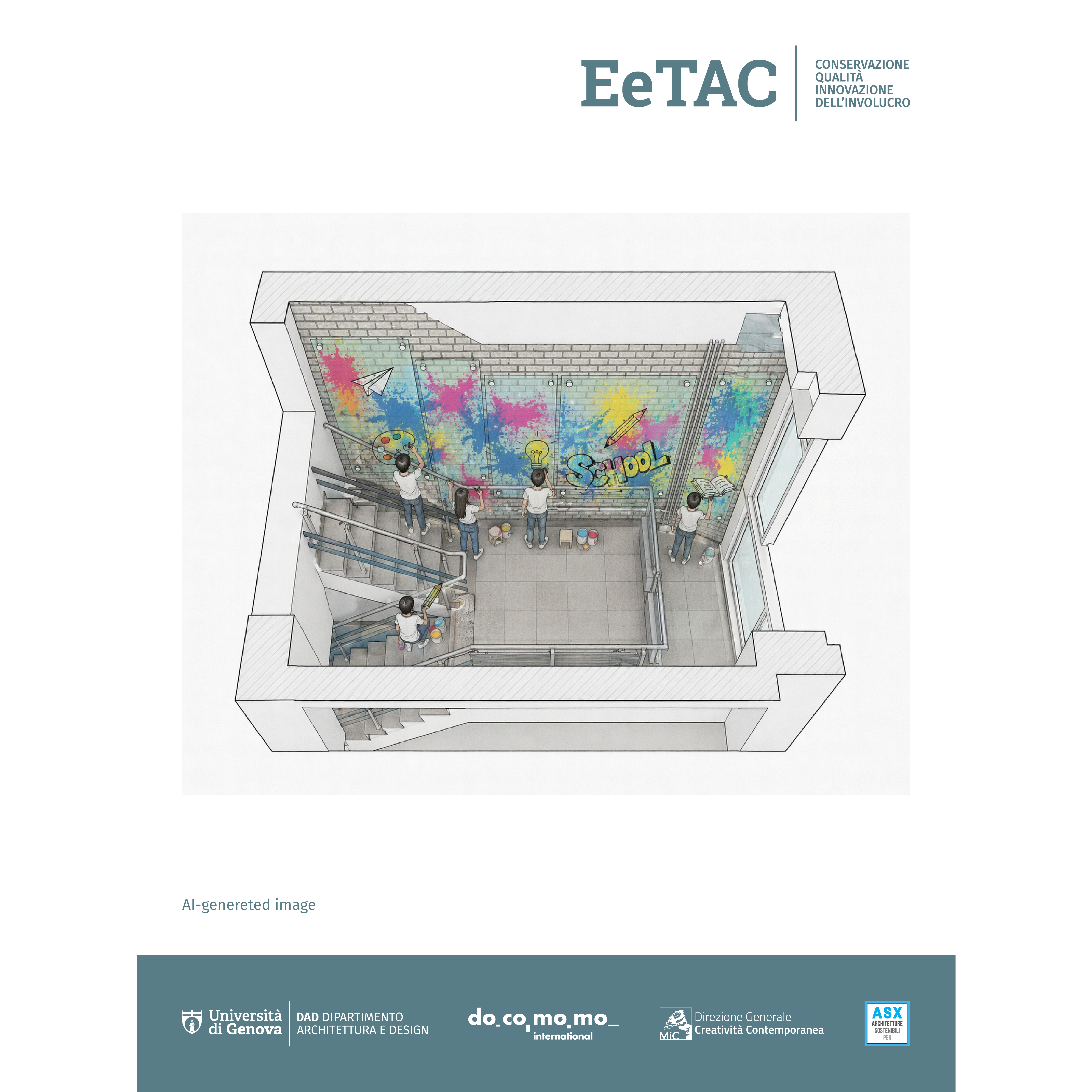
Our project investigates the Garage Ben Maltha / Kweekschool Sint Lucia in Rotterdam as a layered example of modern heritage. Built in the context of post-war reconstruction, the building combined different social values within a single structure: mobility, education, work, and public life. Rather than treating the façade as a surface to redesign, the project begins with observation. Its material identity, rhythm, openings, colours, and urban relationship are read as part of a wider architectural and social system. The proposal preserves the elements that carry identity and adapts only what is necessary to support reuse and energy efficiency. By reducing the material and colour palette, improving glazing, and respecting the existing façade composition, the project aims to reactivate the building without erasing its historical and social meaning. Conservation becomes not only protection, but also a way to make modern heritage useful, legible, and socially active again.
Keywords: social value, sustainability, reuse